AI's hunger for power sparks US private gas plant boom
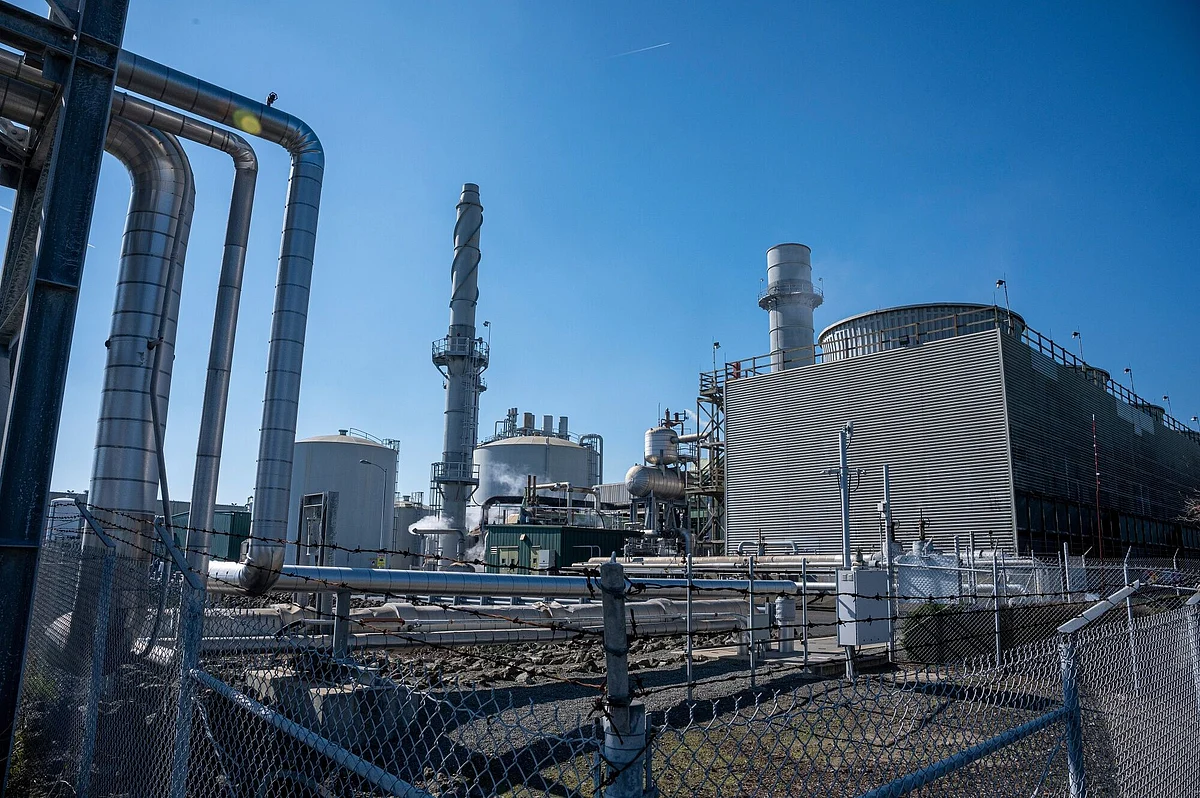
As US tech companies rush to construct data centers necessary for the AI revolution, they are also rapidly building private power plants -- independent of the grid and powered by natural gas -- to speed up their online operations. Cleanview, a research firm, identified roughly 60 data centers planned for the next few years, collectively possessing 97 gigawatts of behind-the-meter generation by the early 2030s, roughly equivalent to Mexico's entire installed capacity.
The environmental consequences could be significant. Depending on the number of plants built, their efficiency, and usage patterns, these plants could emit up to 200 million tons of carbon dioxide annually, equal to the emissions from over 46 million gasoline-powered cars. A recent addition to this trend is a 7.5 GW plant in Texas that will power Amazon's data centers.
Analysts often have to gather clues to link these projects to tech giants like Amazon, as the information is not always explicitly stated. Gas plants not only emit greenhouse gases but also fine particulate matter, linked to various heart and lung issues, nitrogen oxides that exacerbate respiratory diseases, and harmful air pollutants like mercury, formaldehyde, and benzene.
John Rogers, an associate director of energy analytics at the Union of Concerned Scientists, emphasized that powering data centers with behind-the-meter generation relying heavily on dirty gas or diesel turbines is a wasteful practice that worsens climate change and local air pollution. This practice has evolved from being an exception, such as Elon Musk's mobile gas turbine setup at an xAI data center in Memphis in 2024, to being pursued by nearly every major tech company, including Meta, Microsoft, and Oracle.
AI labs such as OpenAI and Anthropic have also leased over 10 gigawatts of behind-the-meter power. While facilities typically use conventional equipment, tech companies are opting for more unconventional and environmentally harmful options, including trailer-mounted generators, aircraft and warship turbines, vehicle piston engines, and refurbished industrial turbines.
Development tends to favor Republican-leaning states, with Texas leading at over 40 gigawatts announced. The NAACP civil rights group has filed a lawsuit against xAI, accusing it of unlawfully operating turbines in Mississippi for its Memphis data center. Earthjustice, co-representing the NAACP, stated concerns about potential future cases encouraging data centers to operate without regard for environmental and consumer protection concerns.
The Trump administration introduced a voluntary Ratepayer Protection Pledge, under which signatories commit not to pass data center costs onto residential consumers, a measure Thoms fears will further accelerate the problem. Gas had been experiencing a resurgence even before Trump's presidency, with new announced fossil fuel capacity for the grid hitting a decade-low in 2022 and rebounding the following year due to the AI boom.
In the first half of 2026 alone, announced new fossil capacity has already surpassed levels seen in the past decade, indicating a significant trend. The power sector's future investment landscape promises to be enormous, with a $2.16 trillion boom expected, but the question remains: which entities will invest where, and why does this matter? AI's biggest challenge now lies not in chips but in electricity.
Written by urgent.news from Gulf News's reporting — not their text. Machine-written — may contain errors; check the original before relying on it.