AI Is Dead. Organoids Are Alive
Mini human brains are being grown in labs all over the world. Soon, they could outthink neural networks.
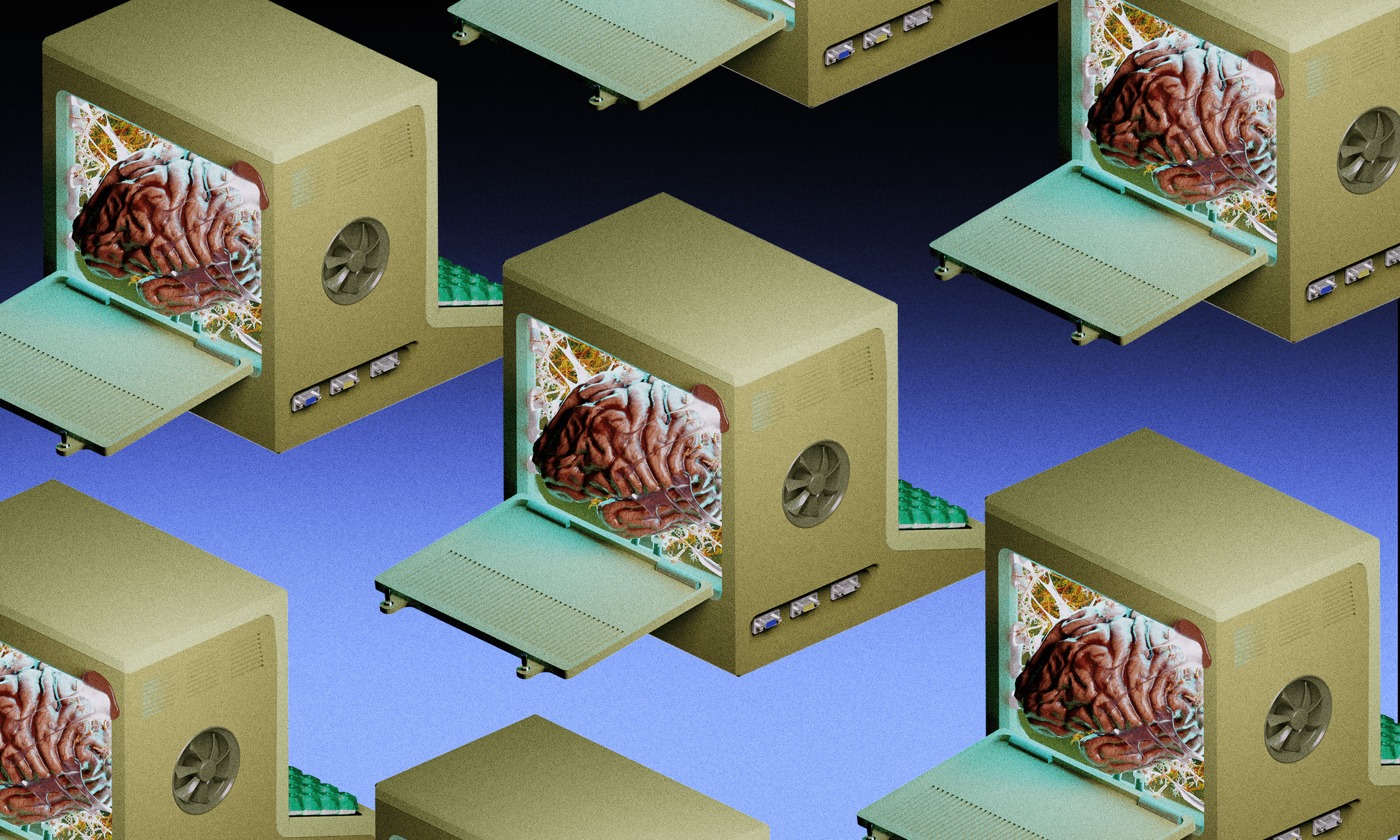
Not a brain like the one nestled in your skull, of course, but a clump of gray matter with millions of neurons, capable of sending and receiving electrical signals. These peculiar creations are known as human brain organoids. Cultivated in a womb-like environment for eight months, they generate brain waves strikingly similar to those of premature infants.
In laboratories worldwide, these neural guinea pigs are subjected to the effects of diseases, toxins, and new drugs. However, their potential may soon extend beyond scientific research. At the University of San Diego, organoids are guiding robotic explorers through mazes and administering psychedelic substances. At Johns Hopkins, they form the foundation for innovative biocomputing systems.
Even in Melbourne, a startup is using them to play video games like Pong and Doom. While others are captivated by large language models and AI agents, biologists are taking a different approach, focusing on the source of intelligence itself—cultivating living neurons and learning how to control them through electrical signals and dopamine.
In the future, artificial intelligence may not be artificial at all, but rather constructed from the building blocks of life itself. The sunken lobby of the Geisel's university was adorned with scientific images, one of which stood out—a clump of human brain cells in a petri dish, surrounded by a network of axons yearning to connect.
Whether in human skulls or lab dishes, neurons long to forge the connections that give rise to thought. Incredibly adept at forming these connections, loose brain cells will multiply and intertwine until they coalesce into autonomous tissue. Human brain organoids appear to do this effortlessly. A mere 20-minute walk from the Geisel, at UCSD's Sanford Stem Cell Institute, they are producing thousands of these organoids.
"Whatever environment you put them in, the first thing they do is try to connect," explained Alysson Muotri, a Brazilian developmental biologist, as we marveled at the blue Pacific Ocean outside his office window. "They connect with the dishes, with the electrodes, and with each other. This is the intrinsic property of our brain to connect."
Muotri's lab has dramatically expanded the scope of brain organoid research over the past decade. He and his colleagues have revived genetic material from hominin fossils to create "Neanderthalized" brain organoids. They have even sent organoid samples to the International Space Station to study the impact of cosmic radiation on astronaut brains.
However, Muotri's primary focus is autism. His 18-year-old son suffers from autism and requires constant care. By studying organoids derived from the cells of autistic donors—such as his own son—he hopes to identify the neural development differences between autistic and neurotypical children. This procedure is not invasive. To create a brain organoid, all that is required is a sample of skin, which can also come from blood, hair, or teeth.
Once you have the adult cells, you introduce them to special proteins that revert them to their embryonic state. From there, these induced pluripotent stem cells can develop into various tissues, including tear gland organoids that cry, heart organoids that beat, or brain organoids that … well, that is still an open question. In utero brain development remains a scientific "black box," with most of our knowledge derived from mouse studies.
However, with organoids, researchers can directly observe the transformation of stem cells into neurons and eventually brain tissue. In theory, scientists might one day study how a colony of dividing cells assembles itself into a mind—creating, from 86 billion neurons, a person like Alysson Muotri or Claire L. Evans, who has gathered here to observe the floating brainlets under the microscope.
Visually, organoids are not particularly impressive; they are opaque, snot-colored, and about the size and shape of a chia seed. Muotri reassures me that these organoids contain 5 million cells, with 2.5 million being neurons—roughly the size of a bee's brain. While this may seem ethically unsettling, Muotri clarifies that, from a bioethical standpoint, these are not people; they are not even animals.
If organoids eventually grow in size from bees to mice, new protocols will need to be established. However, determining where to draw the line remains unclear. Sentience is a complex and unresolved concept; it's not even clear if consciousness can exist without a body or sensory experiences. And let's not forget about calling an organoid conscious.
Philosophers of mind argue that what we call consciousness requires experiences, something that seems impossible without a body.
Written by urgent.news from Wired's reporting — not their text. Machine-written — may contain errors; check the original before relying on it.
Also reported by 1 other outlet
- AI Is Dead. Organoids Are Alive wired.com