2.4 million Afghan girls shut out of secondary school during 5 years of Taliban rule, UN says
UNESCO calls this a grave violation of fundamental rights and on Tuesday urged the immediate restoration of education for women and girls.
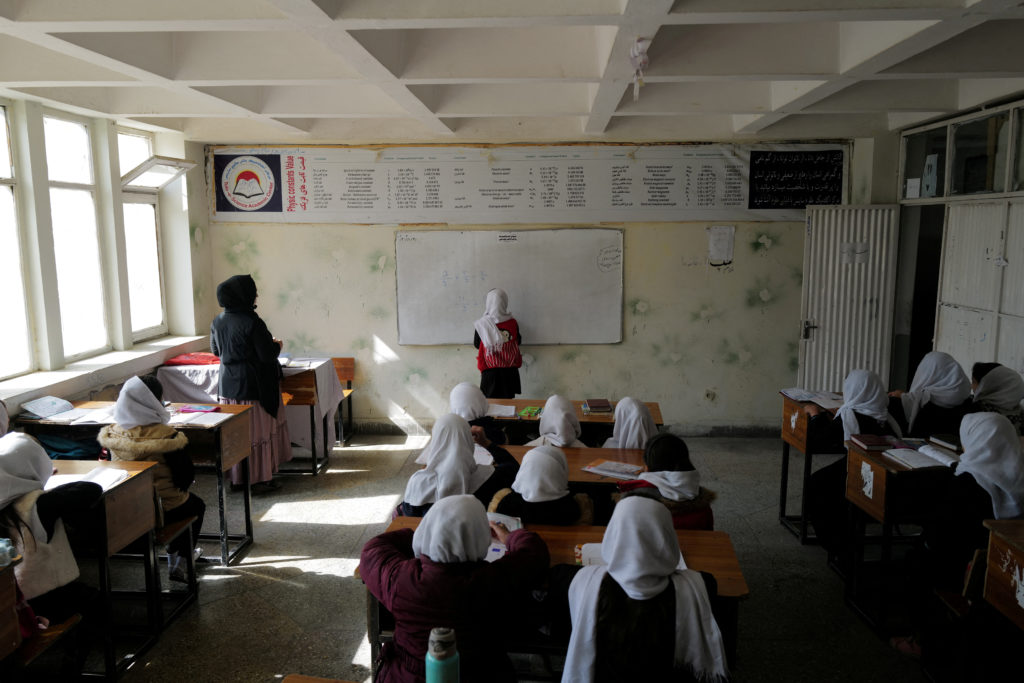
The United Nations has reported that around 2.4 million girls in Afghanistan have been denied secondary education since the Taliban regained power in 2021, urging an end to this "discrimination". The Taliban regime, acknowledged only by Russia, has implemented numerous restrictions on women, described by the UN as "gender apartheid".
The policy mandates that girls cease studying beyond primary school, based on their interpretation of Islamic law. This figure has increased by 200,000 since last year, potentially reaching nearly four million by 2030, if the ban continues, according to UNESCO, the UN's education and heritage agency. UNESCO advocates for the immediate reinstatement of these girls' right to education and condemns the "discriminations against women and girls".
The Taliban administration, which pledged a more lenient rule upon taking power in August 2021, has imposed extensive limitations on women, including bans on university attendance, public parks, gyms, and beauty salons. In March 2022, girls were barred from secondary schools, and universities closed to young women later in the year.
UNESCO noted that these restrictions are reversing two decades of progress in expanding educational opportunities for girls: while access to schooling for girls was limited in 2001, nearly one million were enrolled in secondary education by 2021. Hoda Jaberian, UNESCO's programme coordinator for education in emergencies, emphasized that "Afghanistan girls and women have the right to learn, that's a basic human right; they have the right to work.
They should have the freedom of movement." This ban on education for girls and women also has a substantial economic impact, costing Afghanistan an estimated US$9.6 billion by 2066, as per UNESCO. The wider education sector in Afghanistan is in crisis, with over half of primary school-age children entirely out of school. Over 90% of 10-year-olds cannot read a simple text, according to UNESCO.
Compounding the crisis are issues such as a lack of drinking water, sanitation facilities, and heating in schools, as well as natural disasters, including earthquakes that have struck Afghanistan frequently in recent years. More than seven million Afghans have returned or been forced to return to the country since 2023, adding further pressure to the education system, as per the UN agency.
Written by urgent.news from South China Morning Post's reporting — not their text. Machine-written — may contain errors; check the original before relying on it.
This story
This is one outlet's version. Read the fullest account.