2,300-year-old wine found near Great Wall ruin reveals ancient brewing secrets
“He who has never been to the Great Wall is not a true man,” former Chinese leader Mao Zedong wrote in a poem while passing through the Liupan Mountains in Guyuan, Gansu, during the Long March of the Red Army in October, 1935. The Great Wall he mentioned refers to the Qin Great Wall built during the Warring States period of Qin (325-251 BC), which has a history dating back 2,300 years. It is one…
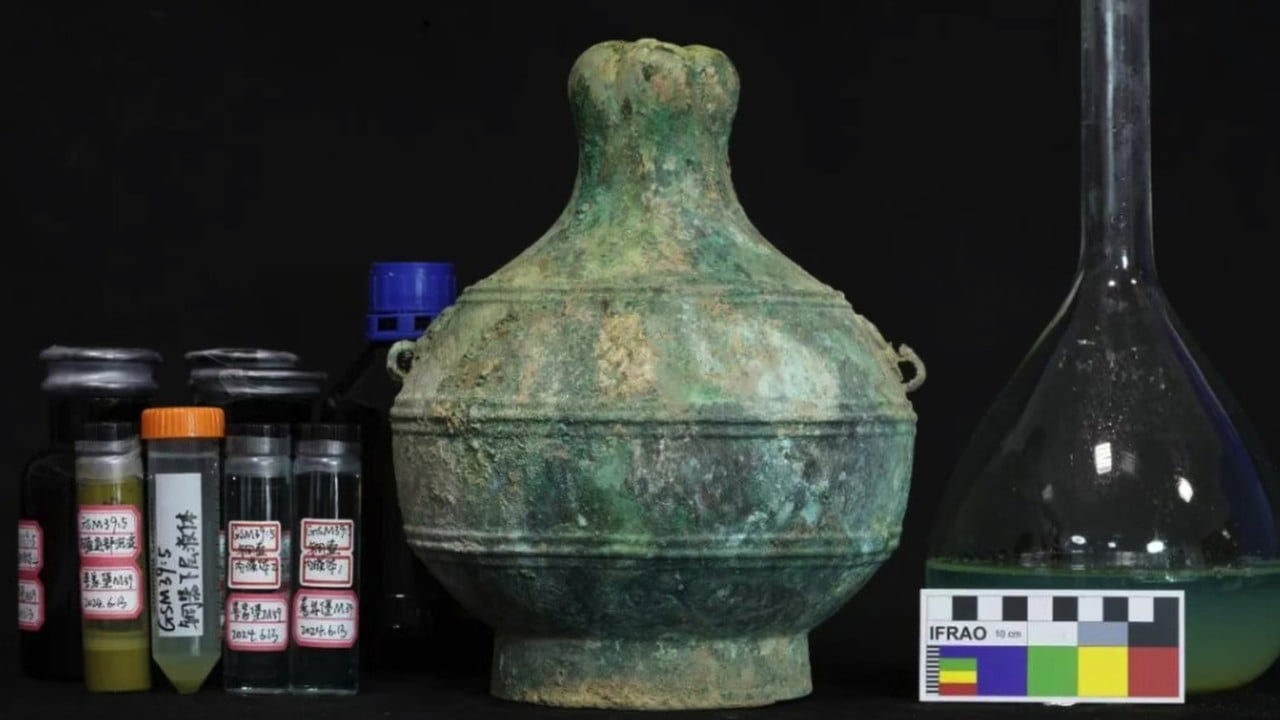
The ancient practice of winemaking in China dates back over 2,300 years, as evidenced by the discovery of a well-preserved bronze wine vessel in a cemetery near the Great Wall. Located 2km from the Warring States-era Qin Great Wall, the Shanjiabao cemetery yielded 179 tombs from the Qin culture. Within Tomb No 39, archaeologists found 3,740 millilitres of ancient liquid residue, confirmed to be wine.
The bronze vessel's double-layer sealing technique and organic clay coating preserved the wine for over 2,000 years. Analysis revealed that the liquid was made from broomcorn millet, wheat, and barley, with the millet accounting for over 92% of the starch content. This discovery sheds light on the brewing techniques and cereals utilized by the Qin people, contributing to the reconstruction of ancient Chinese brewing technology.
The finding also suggests that a Qin soldier, possibly a garrison troop member or resident stationed at a fortification along the Great Wall, may have enjoyed a drink during his lifetime, with his family ensuring his favorite bronze wine vessel accompanied him to the afterlife.
Written by urgent.news from South China Morning Post's reporting — not their text. Machine-written — may contain errors; check the original before relying on it.