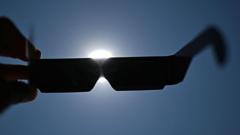
107 years ago, the Eddington total eclipse experiment helped prove Einstein’s theory of relativity
The Eddington experiment used a solar eclipse to prove Albert Einstein’s general theory of relativity
107 years ago, Scientific American published an article chronicling one of the most ambitious total eclipse experiments ever conducted. This experiment aimed to verify Albert Einstein's general theory of relativity, which posited that gravity was not a pulling force but the warping of spacetime. British astronomer Arthur Eddington designed the experiment to take advantage of a solar eclipse, as the darkness of the eclipse would allow the bending of starlight by the sun's gravity to be observed.
Eddington set up telescopic cameras in two locations - Príncipe off the coast of Africa and Sobral in Brazil - and compared the resulting photographs with existing star maps. The results aligned with Einstein's calculations, demonstrating that the stars had indeed appeared where the theory predicted. This groundbreaking experiment, published in November 1919, showcased that the sun does indeed attract passing waves of light, causing their paths to deviate.
Today, University of Iceland Ph.D. student Matthias Harksen plans to re-create Eddington's experiment, hoping to inspire others to learn more about Einstein's work and the importance of science.
Written by urgent.news from Scientific American's reporting — not their text. Machine-written — may contain errors; check the original before relying on it.