Watch Japanese H3 rocket launch 10,800-pound navigation satellite to orbit today
Japan's H3 rocket will launch the Michibiki 7 navigation satellite to orbit this afternoon (Aug. 10), and you can watch the action live.
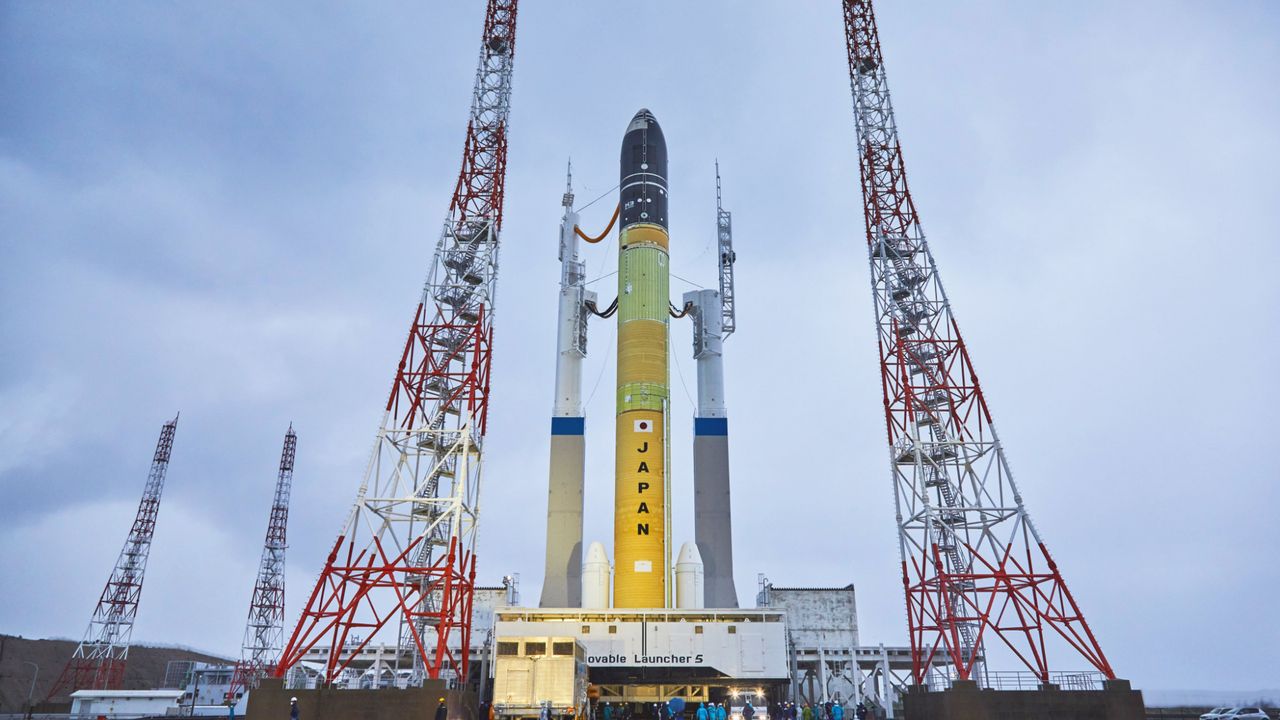
Japan's H3 rocket is poised to launch its ninth mission this afternoon, carrying the Michibiki 7 navigation satellite into orbit. The H3 will depart from Tanegashima Space Center during a one-hour window that begins at 3:23 p.m. EDT (1923 GMT; 4:23 a.m. local time on Aug. 11). The live launch can be viewed through Japan Aerospace Exploration Agency's coverage or directly via JAXA, starting about an hour before liftoff.
The H3, standing 187 feet (57 meters) or 207 feet (63 meters) tall, succeeded the H-2A rocket, which retired last year after 50 flights. With two previous failures, the H3 has rebounded, delivering six satellites to orbit on June 11. Michibiki 7 is part of Japan's Quasi-Zenith Satellite System (QZSS), a navigation system compatible with GPS and beneficial for the Asia-Oceania region.
The system currently consists of five satellites, with Michibiki 7 adding to this network. Additionally, the H3 will transport a payload for the U.S. Space Force, the Situational Awareness Camera Hosted Instrument (SACHI), developed by MIT Lincoln Laboratory. This marks the second SACHI to be launched on a QZSS satellite, following Michibiki 6's launch in February 2025.
Written by urgent.news from Space.com's reporting — not their text. Machine-written — may contain errors; check the original before relying on it.