U.S. alcohol is a bargaining chip in trade talks, but how much is it worth?
The future of U.S. booze in Canada is being seen by many as a key bargaining chip ahead of critical trade negotiations in Washington focused on U.S. tariffs.
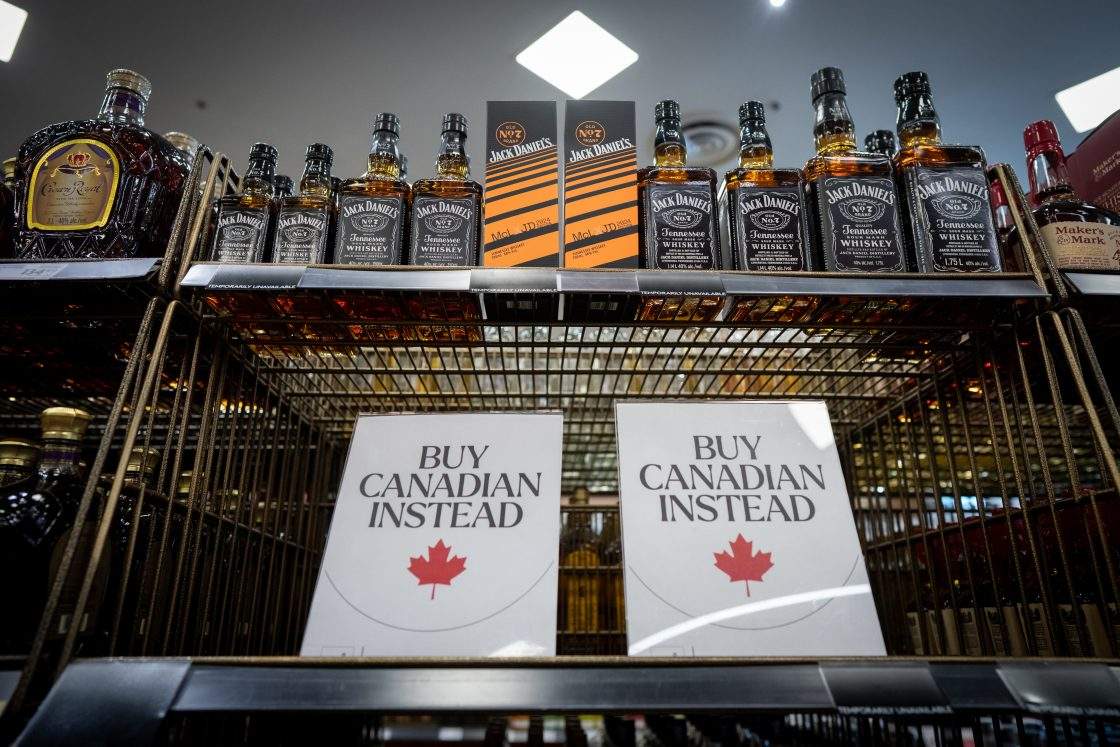
The U.S. alcohol market in Canada has become a key bargaining chip in trade negotiations ahead of critical talks in Washington focused on U.S. tariffs. This leverage stems not only from financial factors but also from political pressure, with many senators and members of Congress expressing concern over the significant decline in U.S. alcohol sales in Canada.
Andrew DiCapua, an economist at the Canadian Chamber of Commerce, notes that Canadians are the largest customer for U.S. alcohol products. The U.S. imposed 50% tariffs on Canadian goods last month in response to "discriminatory" measures by Canada, including boycotts of American alcohol products. Prime Minister Mark Carney is working against a deadline to respond to these tariffs, with Conservative Leader Pierre Poilievre criticizing Carney for backing down to multiple American demands, including the splitting of net revenues from the Gordie Howe Bridge.
Public opinion in Canada largely supports keeping U.S. alcohol off store shelves, according to recent surveys. In early 2025, Canadian imports of U.S. alcoholic beverages dropped by approximately 81%, from $718 million to $137 million. This resulted in a total dollar value of about a billion Canadian dollars lost for U.S. exporters.
For example, the Liquor Control Board of Ontario reported annual sales of up to $965 million for U.S. alcohol, while British Columbia's sales were around $220 million in 2024. The Nova Scotia Liquor Corporation and New Brunswick Liquor each confirmed annual sales of roughly $42 million and $40 million respectively, while Prince Edward Island's sales topped about $10 million.
These figures represent significant losses for Canadian retailers. However, some provinces have taken advantage of the situation by featuring their own products in the freed-up shelf space. Quebec, for instance, is open to allowing U.S. alcohol back in stores if there are trade concessions from the U.S., such as reductions in tariffs for key sectors like forestry, aluminum, and manufacturing. The longer U.S. alcohol remains off Canadian shelves, the more tense the negotiations may become.
Written by urgent.news from Global News's reporting — not their text. Machine-written — may contain errors; check the original before relying on it.
This story
This is one outlet's version. Read the fullest account.