Trump unveils trade actions to compete with China on solar and chips
The White House on Thursday imposed a series of price floors and a 15% tariff on products made from polysilicon, the raw material used in semiconductors and solar panels that is primarily produced by China. U.S. President Donald Trump’s proclamation under Section 232 of the Trade Expansion Act of 1962 is aimed at supporting domestic […]
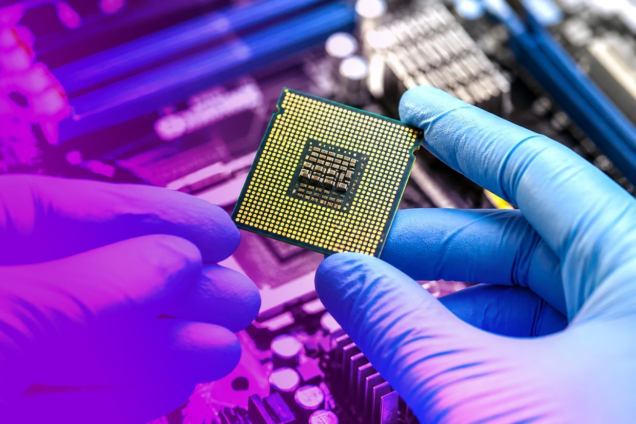
On Thursday, the White House announced a range of measures to compete with China in the production of solar panels and semiconductors. President Donald Trump's proclamation under Section 232 of the Trade Expansion Act of 1962 imposes price floors and a 15% tariff on products made from polysilicon, a crucial raw material for semiconductors and solar panels.
Primarily produced in China, polysilicon is used to create semiconductor wafers and solar cells. By supporting domestic polysilicon production, the goal is to bolster U.S. semiconductor and solar supply chains, which are essential for advancing artificial intelligence and energy sectors. The proclamation aims to ensure the commercial viability of U.S. polysilicon production and its derivatives to meet economic and national security needs.
U.S. solar factories have long complained about Chinese rivals dumping solar panels at below-market prices, receiving government subsidies, and relocating operations to avoid U.S. tariffs. The U.S. currently operates two polysilicon manufacturing facilities—one in Michigan and another in Tennessee. Both companies, Hemlock Semiconductor and Wacker Chemie, expressed appreciation for the administration's commitment to enhancing U.S. competitiveness in the semiconductor industry.
A spokesperson from Corning, which operates the Michigan plant, stated that the decision encourages continued U.S. capacity investment. Wacker Chemie, the Tennessee-based company, said it is reviewing the actions and appreciates the administration's engagement on the issue, particularly its implications for supply chain resilience, advanced computing infrastructure, and national defense.
The U.S. solar industry has seen significant growth since the 2022 enactment of tax incentives. However, much of this expansion has been in panel assembly, leaving manufacturers reliant on imported wafers and cells, which necessitates longer investment periods. Solar companies T1 Energy, First Solar, and Qcells welcomed the move, highlighting its significance for U.S. manufacturing and domestic energy supply chains.
T1 Energy CEO Dan Barcelo noted the decision as a "decisive win," while the firm has recently announced a $510 million investment in a cell factory. The trade protections under the proclamation will take effect on December 4. However, Tim Brightbill, a trade attorney with Wiley Rein, cautioned that the delay in implementation could prompt a surge in imports in the coming months, as companies adjust their supply contracts to accommodate higher prices.
The White House document states that the president has set minimum import prices for polysilicon, polysilicon ingots and wafers, solar cells, and solar modules. Additionally, the proclamation authorizes the Commerce Department to establish an incentive program for companies investing in polysilicon or derivative product manufacturing.
Written by urgent.news from Adom Online's reporting — not their text. Machine-written — may contain errors; check the original before relying on it.