Too much rain, too little sun: Cambodia’s salt farmers face a changing climate
PHNOM PENH, Aug 10 — Changing monsoon patterns linked to climate change are putting pressure on Cambodia’s s...
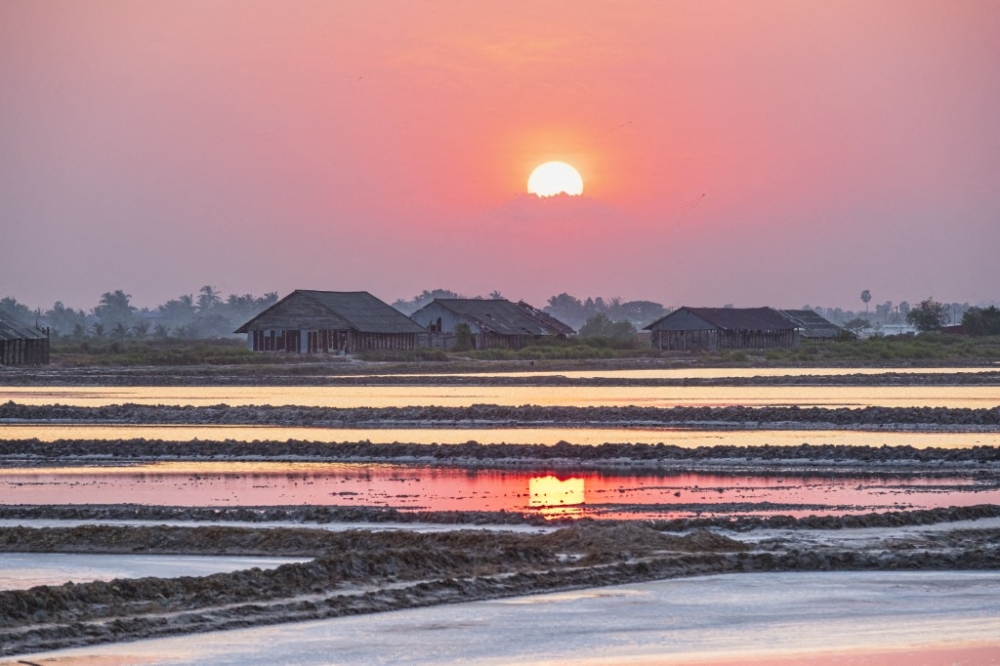
Cambodia’s sea salt industry is facing challenges due to changing monsoon patterns caused by climate change. This industry relies on extended periods of dry and sunny weather, but heavy rainfall during the dry season has disrupted production in Kampot and Kep provinces, the main salt-producing regions. President of the Association of Geographical Indication Kampot-Kep Salt Producers, Bun Narin, stated that production patterns have changed over the past five years due to heavy rain and high tides flooding salt ponds.
The region, located around 150 kilometers southwest of Phnom Penh, is home to 141 producers who harvest sea salt using traditional solar evaporation techniques during the dry season, from October to May. Under the intense tropical sun, seawater is channeled into shallow evaporation ponds, and layers of salt crystals are collected by hand.
In 2023, Kampot-Kep salt received Geographical Indication certification, enhancing its recognition for quality and origin. However, Narin anticipates a significant decrease in production this year, with an expected harvest of around 75,000 metric tonnes, compared to only about 30,000 tonnes in 2025. The industry is also grappling with poor infrastructure, such as limited access to roads, electricity, and drinking water, which adds to the producers' difficulties.
Additionally, cheaper imported salt from neighboring countries poses a threat to the demand for domestically produced salt. Cambodia is highly vulnerable to climate change, ranking 12th globally in the Global Climate Risk Index, with growing risks from floods, heavy rainfall, droughts, and extreme weather threatening the agriculture sector and livelihoods of millions of farmers.
Written by urgent.news from Malay Mail's reporting — not their text. Machine-written — may contain errors; check the original before relying on it.