The U.S.’s Largest Reservoir Just Fell to Its Lowest Water Level
The record was first broken on Thursday night and continued to fall in the following days. Here’s why that matters.
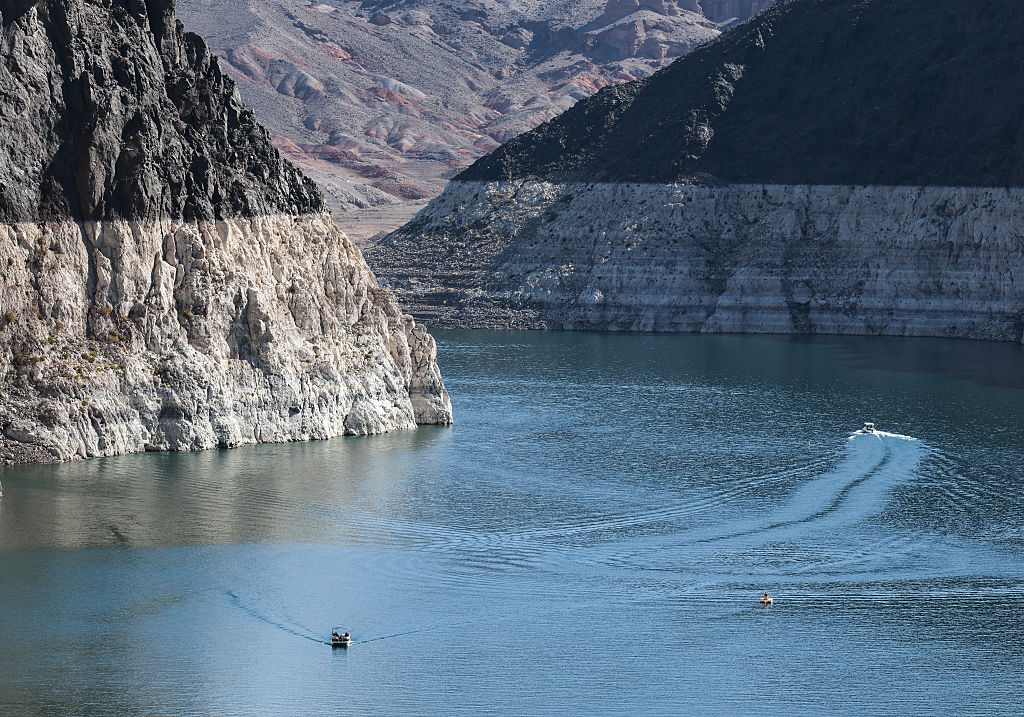
Lake Mead, the crucial reservoir straddling the Arizona-Nevada border, has hit its lowest recorded water levels, escalating fears of substantial water supply cuts for millions across the American Southwest. The reservoir, formed by the Hoover Dam, dropped to 1,040.3 ft (317.1 m.) above sea level as of Sunday, a record low since the lake's initial filling in the 1930s.
At full capacity, Lake Mead reaches a surface height of over 1,220 ft. above sea level; each inch of this vertical drop translates to billions of gallons of water. The ongoing Colorado River system's threats, including overconsumption and climate change, exacerbated by a persistent megadrought, are to blame. Lake Powell, the other significant reservoir in the basin, is also expected to reach record lows.
As snowpack in the Colorado River Basin collapsed to its worst level on record due to a warm winter, it has further strained the water supply. J.B. Hamby, chair of the Colorado River Board of California, emphasized the gravity of the situation, stating that the low water level impacts approximately 30 million people. The dwindling supply threatens hydropower generation, with Lake Mead's elevation nearing the 1,035-ft operational threshold, risking the shutdown of some Hoover Dam turbines and a 70% decline in generation capacity.
The Bureau of Reclamation forecasts Lake Mead levels may reach this threshold in the coming months or spring next year. Negotiations to allocate and conserve water have been fraught with disagreements, with the U.S. government intervening to propose a reduction in water use for the Lower Basin states—Arizona, California, and Nevada.
However, Arizona's governor remains firmly opposed to the cuts, potentially igniting a political showdown. This crisis in the Colorado River Basin is part of a broader trend, as nine out of 54 tracked reservoirs by the Bureau of Reclamation have recently recorded their lowest levels in the past three decades.
Written by urgent.news from Time's reporting — not their text. Machine-written — may contain errors; check the original before relying on it.