The Roboguard Revolution is Short-Circuiting
Knightscope and other robotics companies are rethinking automated security following canceled contracts. One pivot? Human guards.
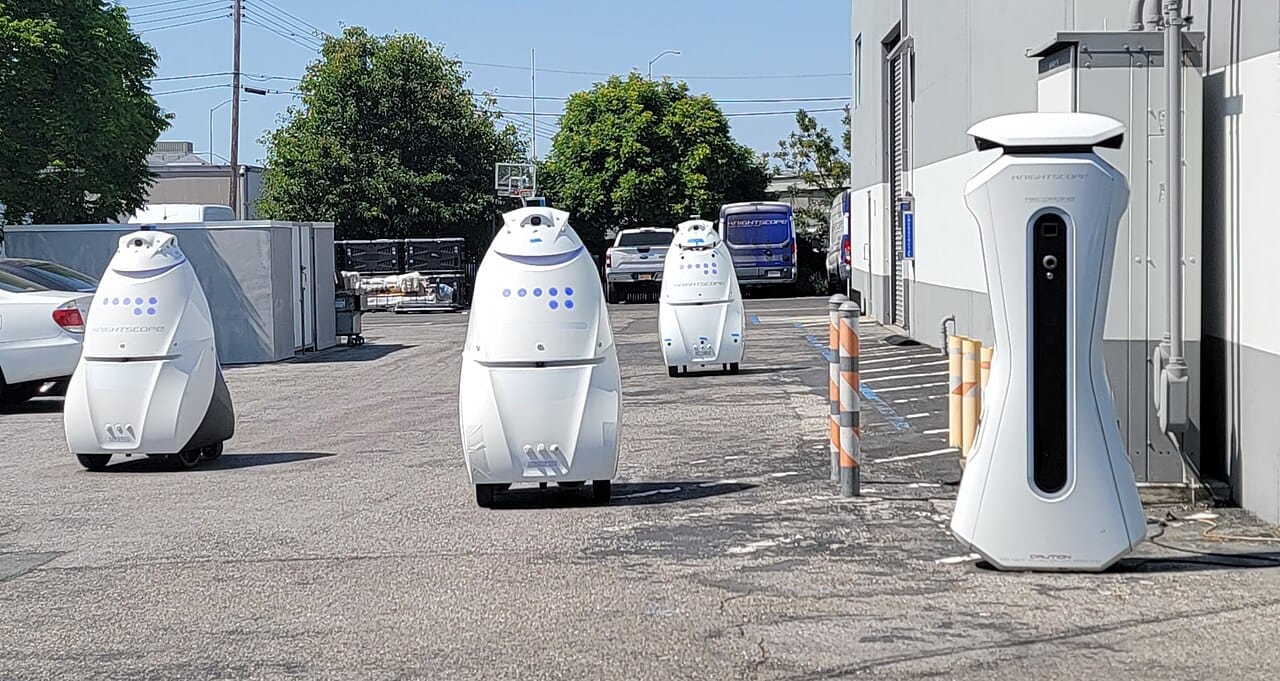
Robotic security solutions have been marketed to businesses and local governments as a means to deter and detect crime. However, a growing number of companies are reevaluating the effectiveness of AI-powered security robots after experiencing a series of contract cancellations and questions about their ability to meet the needs of various organizations. At least 21 security robot deployments have been documented since 2015, with 13 of these programs ultimately ending.
Silicon Valley-based Knightscope has secured the most security robot contracts, but also bears the brunt of cancellations. For instance, New York City's then-Mayor Eric Adams installed a Knightscope robot at Times Square subway station for the overnight shift, but the program was terminated in 2024 when the pilot expired. The reason for the cancellation has not been clarified by city leaders.
Dublin, Ohio, similarly discontinued a Knightscope robot dubbed DubBot after a two-year pilot program that lasted less than ten months. The city reported that the robot failed to identify any criminal incidents or lead to any tickets or arrests, ultimately gathering dust in an empty storefront. Sheila Sparks, owner of Sparks Protection Services near Columbus, Ohio, for over a decade, is not surprised by these outcomes, emphasizing the essential human touch needed to de-escalate tense situations. "A robot can’t do that," she stated.
In response, Knightscope CEO William Santana Li announced a new strategy, incorporating human security guards alongside their robots and AI-powered software. However, the company has faced financial struggles, incurring net losses since its inception in 2013 and owing $273 million. Li acknowledged that while technology is powerful, a combination of humans and machines can be even more effective. The company's pivot is aimed at capturing a larger share of the physical security market, estimated at $230 billion annually.
Experts like Missy Cummings, a robotics professor at George Mason University, argue that robots struggle to navigate the constantly changing environments and face ambiguous situations daily. AI decision systems can perform poorly when confronted with situations outside their training dataset, making them less reliable in real-world security scenarios.
In 2016, a Knightscope robot rolled over a 16-month-old boy's foot in a shopping center, leading to a public apology from the company. More recently, a Knightscope robot at San Antonio International Airport struggled with badge scanning, communication, and navigation, leading to the termination of its lease following a one-month test.
Despite the challenges, private security officers have seen a surge in demand, with companies offering average salaries of around $40,000 per year. However, security robots are often marketed as a cost-effective alternative, promising physical surveillance without the need to pay salaries. Andrew Ferguson, a law professor at George Washington University, sees these robots as a form of security theater, offering a symbolic presence rather than tangible results in preventing or solving crimes.
Written by urgent.news from 404 Media's reporting — not their text. Machine-written — may contain errors; check the original before relying on it.