The Mecca Pact Extends Pakistan’s Security Role Westward
Six months ago, it was unclear whether trilateral discussions between Pakistan, Saudi Arabia, and Turkiye would produce a formal agreement. They now have.
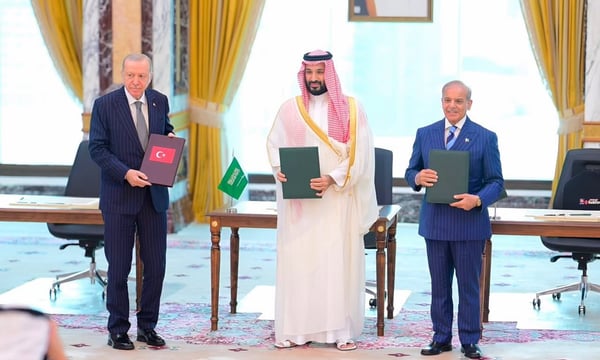
The Mecca Pact, a defense agreement signed by Saudi Arabia, Turkiye, and Pakistan on August 7, extends the country's security role westward. This agreement, officially named the Mecca Joint Defense Agreement, stipulates that an armed attack on one party will be regarded as an attack on all three. However, the pact lacks clear procedures for determining when it has been triggered, geographical limitations, or the assistance each country must provide.
In contrast to NATO's Article 5, the Mecca pact does not currently have a comparable military planning framework. Saudi Arabia has previously attempted similar initiatives, but they lacked the same level of commitment and cohesion as the Mecca pact. Pakistan's participation in the pact allows it to deploy its own forces and systems while preserving sovereignty, unlike some previous military commitments.
While India remains a central reference point for Pakistani defense planning, the Mecca pact enables Pakistan to expand its security role in the Gulf region. However, this expansion comes with costs, as potential conflicts with India could strain the pact's collective-defense clause. Although Pakistan possesses a nuclear arsenal, it is unclear if this has formally extended its nuclear guarantee to the other signatories.
The pact's implementation may face challenges due to differences in military equipment and technology among the three countries. Despite this, the Mecca Pact could provide the three nations with greater flexibility within the existing regional order, allowing them to operate more independently.
Written by urgent.news from The Diplomat's reporting — not their text. Machine-written — may contain errors; check the original before relying on it.