The daughters who forced South Africa to listen
Seventy years after the historic 1956 Women’s March, the legacy of women’s resistance continues to shape South Africa. The piece honours generations of women who fought apartheid and argues that their leadership remains central to building a more equal society.
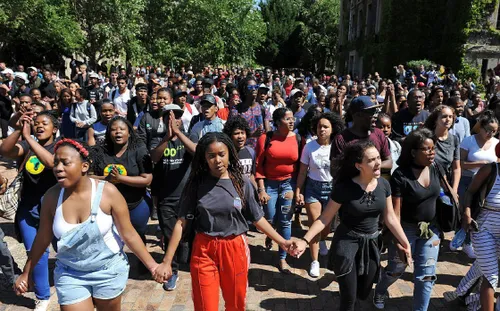
On the morning of August 9, 1956, an unprecedented 20,000 women descended upon Pretoria, marching towards the Union Buildings with a conviction that would forever change the course of South African history. These women, rather than pleading for mercy or forgiveness, boldly declared the nation's refusal to acknowledge the integral role women played in the fight for liberation.
They insisted that South Africa recognize the profound contributions of women to the struggle, elevating women from mere footnotes to the very backbone of the nation's fight for freedom.
To fully appreciate the audacity of this march, one must delve into the harsh realities of life under apartheid. Black women, in particular, were subjected to a dual oppression of race and gender. They were tasked with raising families, nurturing communities, and working in the most unforgiving conditions all while being denied basic rights.
The pass system, a tool of oppression that controlled every aspect of Black lives, further reinforced their subjugation. Yet, even in the face of such adversity, these women refused to succumb to the oppressive regime. They organized, strategized, and mobilized, transcending the boundaries of race, class, and geography. Their unity was their strength, and their defiance was a testament to their resilience.
The march itself was led by women whose names would become synonymous with courage and sacrifice. Lilian Ngoyi, Helen Joseph, Rahima Moosa, and Sophie de Bruyn were just a few of the trailblazers who stood at the forefront of this historic event. Their collective efforts, though not yielding immediate results, planted the seeds for the future.
The silence of these women during the march was not one of submission but a powerful statement of defiance. It was a reflection of their determination to be heard, not through noise, but through action.
While the march of 1956 did not immediately dismantle apartheid, it laid the groundwork for future resistance. It demonstrated that women could indeed mobilize at scale, build coalitions across political organizations, and confront the apartheid state directly. Women like Victoria Mxenge and Winnie Madikizela-Mandela continued to lead from the front, using their influence to challenge the status quo and advocate for gender equality.
Their leadership, marked by resilience and unwavering commitment, served as a beacon for generations to come.
The legacy of the 1956 women's march is not confined to a statue or a monument. It lives on in the countless women who have followed in their footsteps, fighting tirelessly for gender equality and women's rights. Today, seventy years later, women in South Africa continue to lead in various spheres of society, from politics and civil society to business and academia.
They do so not because they are entitled to do so, but because they have always led, shaping the nation's trajectory and ensuring that the struggle for freedom is not only about the absence of oppression but the presence of equality for all.
Written by urgent.news from IOL's reporting — not their text. Machine-written — may contain errors; check the original before relying on it.