TechTuber Builds Custom Direct-To-Die Watercooler For GPU; Performs Better Than AIO Cooler
TechTuber TrashBench recently posted a video where he performed one of the most riskiest watercooler experiments to date: pumping water directly on to the die of a GPU. TrashBench has one question: Why do we need metal at all? Why can’t we just pump water directly onto the bare silicon? The stated goal sounds simple […] The post TechTuber Builds Custom Direct-To-Die Watercooler For GPU; Performs…
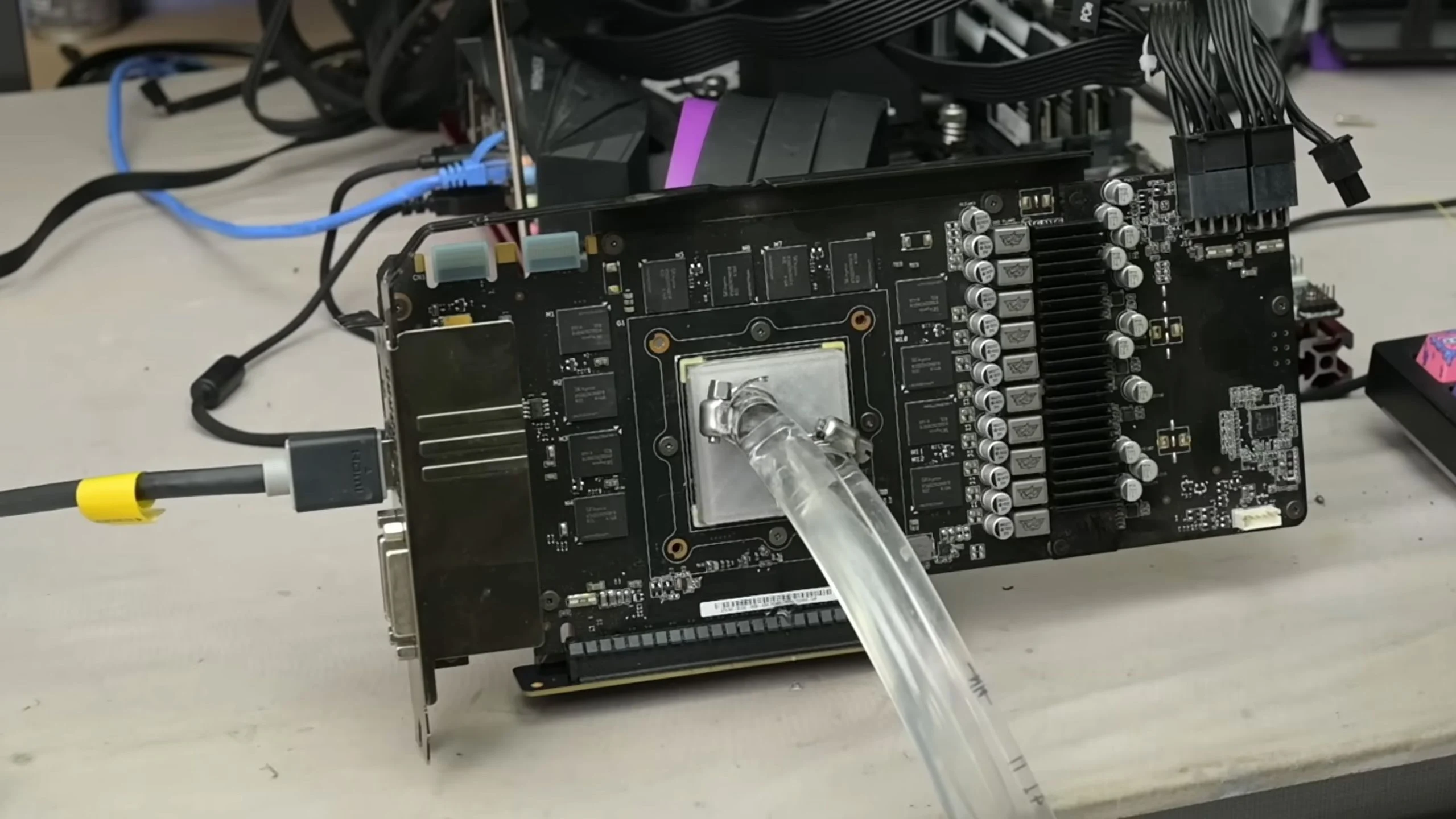
TechTuber TrashBench recently conducted a groundbreaking watercooler experiment, directly pumping water onto the die of a GPU for the first time. The unconventional method raises a simple question: why do we need metal at all? TrashBench aimed to create a custom, 3D-printed GPU "waterblock" without a traditional metal block sitting atop the silicon, ensuring the pump doesn't leak.
Despite the simplicity of the goal, the process proved challenging. Initially, TrashBench used a dead NVIDIA RTX 3060 as the prototype, successfully creating a workable direct-to-die model before testing it on a GTX 980 card. The first trial and error phase concluded with using a more powerful RTX 2060 as the test subject. For comparison, TrashBench measured performance against a conventional AIO cooler from Arctic.
The direct-to-die custom watercooler significantly reduced temperatures by 8°C across Unigine Heaven and Cyberpunk 2077 benchmarks. Running the custom watercooler at -28°C water, the RTX 2060 dropped to a cool 13°C, while the AIO cooler peaked at 39°C. Although the performance of TrashBench's custom watercooler was less effective on a CPU, the results proved that the direct-to-die method works well, provided it is executed correctly.
Written by urgent.news from Lowyat.NET's reporting — not their text. Machine-written — may contain errors; check the original before relying on it.