Seventy years after the Women's March, the struggle continues
Seventy years after the historic 1956 Women's March, South Africa has made significant progress towards gender equality, but women continue to face poverty, unemployment, gender-based violence and unequal economic opportunities. The article argues that empowering women through education, economic inclusion, leadership opportunities and stronger action against GBVF is essential to building a more…
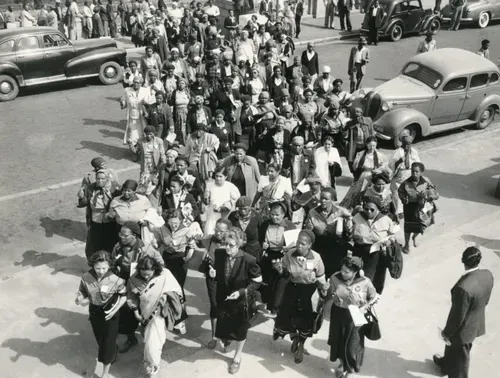
On 9 August 1956, an estimated 20,000 South African women of various races took to the streets of Pretoria, in a march that resonates to this day as a pivotal moment in the nation's struggle for freedom. The women marched against unjust pass laws, which regulated not only their movements but also their dignity. Their rallying cry, "Wathint' Abafazi, Wathint' Imbokodo" ("You strike a woman, you strike a rock"), echoed their unyielding determination.
This march, a testament to the power of unity, highlighted the central role women played in shaping South Africa's future. Their sacrifices underscored that progress often demands enduring courage and resilience. Today, 70 years later, the legacy of those women endures. While South Africa has made significant progress in advancing women's rights since the dawn of democracy, many women still encounter systemic obstacles.
These barriers manifest in high unemployment rates, income disparities, limited access to opportunities, and underrepresentation in key sectors. Economic empowerment stands as a cornerstone of this ongoing struggle. Despite policies aimed at supporting women, many face hurdles accessing funding, markets, and the resources necessary for business success.
Strengthening support systems is crucial to enable women's full participation in the economy. This includes access to capital, training, technology, and entrepreneurial guidance. The fight against gender-based violence (GBV) is another critical front. Recognising GBV as a violation of dignity and security, President Cyril Ramaphosa established South Africa's first National Council on Gender-Based Violence and Femicide.
This council aims to lead nationwide efforts in prevention, survivor support, law enforcement coordination, and civil society collaboration. Education and skill development are also vital to advancing women's empowerment. Ensuring that girls and young women have access to quality education in fields like science, technology, engineering, and mathematics is essential.
The Human Resource Development Council is focusing on inclusive economic growth and skills development, addressing gender gaps through technical education and digital training. However, lasting change requires more than policy interventions. South Africa must confront ingrained patriarchal attitudes and stereotypes that influence women's experiences at home, school, work, and within communities.
Cultural transformation is essential, with a shift towards equality, mutual respect, and shared responsibilities. Engaging men and boys as allies in this process is equally important. Additionally, increasing women's representation in leadership roles is necessary. While progress has been made in political representation, women remain underrepresented in corporate leadership, entrepreneurship, and other critical economic sectors.
Organizations must proactively invest in mentorship, leadership development, and succession planning to ensure more women ascend to influential positions. Recognising the heavy burden of unpaid care work is also crucial. Many women juggle professional and caregiving responsibilities without adequate support. Enhancing access to childcare, implementing family-friendly workplace policies, and sharing caregiving duties more equitably can empower women to engage more fully in education, employment, and leadership.
The government is working to dismantle systemic barriers through targeted public procurement allocations, specialized funds, and collaborative partnerships. Initiatives such as the 40% preferential procurement target for women-owned businesses, financial support from funds like the Isivande Women's Fund, and the EmpowerHer Market Trade Fair are examples of these efforts.
As these measures unfold, the journey towards true gender equality remains an ongoing commitment, demanding the collective effort of all sectors of society.
Written by urgent.news from IOL's reporting — not their text. Machine-written — may contain errors; check the original before relying on it.