SC declares applying IT penalties on repealed ordinance unlawful
ISLAMABAD: The Supreme Court has held that the penalties under Sections 182,184 and 186 of the Income Tax Ordinance (ITO), 2001 are unlawful and legally unsustainable. A five-member larger bench, headed by Justice Shahid Waheed, which decided the issue, also held that “the conclusion drawn by a three-member Bench (of SC) in the case of Eli Lilly Pakistan (Pvt.) Ltd depicts correct legal position…
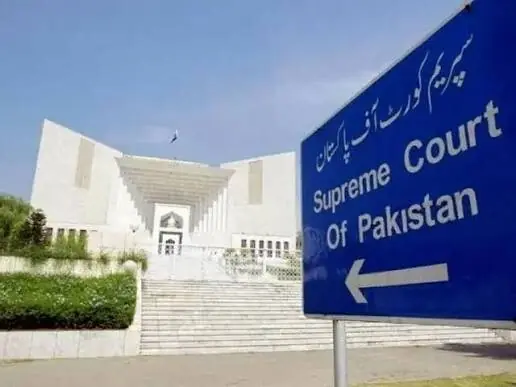
The Supreme Court of Pakistan has ruled that the penalties under Sections 182, 184, and 186 of the Income Tax Ordinance, 2001 are unlawful and unable to withstand legal scrutiny. This verdict was delivered by a five-member bench, led by Justice Shahid Waheed. The court's decision is based on the principle that amendments to a section, such as Sections 122(5) and 122(5A) of the Income Tax Ordinance, are meant to be prospective in nature and cannot be applied retroactively to assessments that concluded on or before June 30, 2002.
The court's decision is a response to a disagreement between two previous Supreme Court benches. One bench in the case of Islamic Investment Bank Ltd argued that the application of the amending provisions should be retrospective, whereas the subsequent bench disagreed, stating its position was legally incorrect.
The Supreme Court's ruling comes in response to earlier decisions that had conflicted with each other. In the case of Eli Lilly Pakistan Pvt Ltd (2009 PTD 1392), the court held that assessments completed under the repealed Ordinance of 1979 should strictly follow the old law, while assessments made after the repeal should be governed by the Income Tax Ordinance, 2001.
The court emphasized that when a taxing statute is repealed and re-enacted, any provision that creates additional charges, liabilities, or increases a taxpayer's burden cannot be classified as a mere machinery or procedural amendment. Therefore, it cannot be applied retrospectively. The courts noted that penalty provisions under Sections 182, 184, and 186 of the Income Tax Ordinance create an additional burden and fiscal liability, making it impossible to apply them retroactively to assessments made under the repealed law of 1979.
The court further pointed out that Sections 182, 184, and 186 of the Income Tax Ordinance 2001 allow for the imposition of financial consequences for acts of default, which increases the taxpayer's legal consequences by creating an independent fiscal burden.
Written by urgent.news from Business Recorder's reporting — not their text. Machine-written — may contain errors; check the original before relying on it.