Notaufnahmedaten: „Avocado-Hand“-Fälle steigen – Mehr Frauen betroffen
Die Zahl der „Avocado-Hand“-Fälle steigt an einem Klinikum, das Zahlen dazu ausgewertet hat. Was hinter den Schnittverletzungen steckt und wie man sie vermeiden kann.
In a northern German hospital, the number of "Avocado-Hand" injuries is on the rise, with more women affected, according to a representative from the University Hospital Schleswig-Holstein in Kiel and Lübeck. This specific type of hand injury occurs due to improper avocado preparation, and an analysis of notepad data from early 2020 to mid-2026 revealed a clear increase in such incidents. In 2020, there were 8 cases, which rose to 18 in 2024 and 21 in 2025.
Women accounted for a disproportionate number of cases, with 81.9 percent of those injured being female. Over half of the injured individuals were between 20 and 29 years old, with 44 cases in that age group. The operationally required "Avocado-Hand" injury necessitates surgical treatment in many instances, sometimes involving microsurgery.
A similar rise in such injuries was also noted by a US team analyzing 50,413 cases from 1998 to 2017, which registered over 3,000 cases between 1998 and 2002 and nearly 27,059 cases between 2013 and 2017. This increase correlates with the growing consumption of avocados in the United States, as reported by the team in "The American Journal of Emergency Medicine."
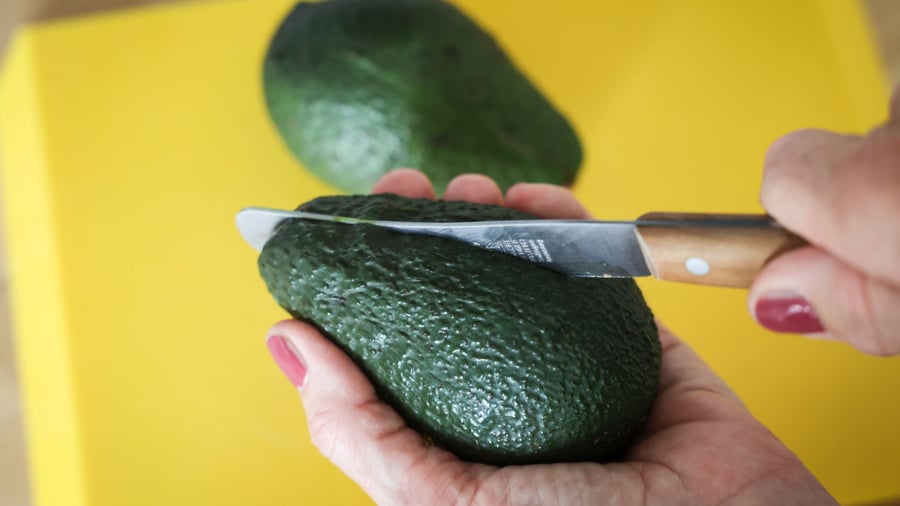
The "Avocado-Hand" results from an unfavorable interaction between the hand anatomy and the nature of the fruit. Typically, one holds the avocado half in the non-dominant hand and cuts the flesh or pries out the hard, smooth pit with the dominant hand's knife tip. If the blade slips from the pit or unexpectedly slides through the soft skin, the knife strikes the hand's inner surface or the fingers' bends, passing close to vital structures like flexor tendons, nerve fibers, and arteries under the skin.
These injuries can lead to severe bleeding and, in some cases, partial loss of finger function. Even after successful surgery, the hand often needs to be rested for weeks and undergo intensive physiotherapy.
To minimize the risk of permanent functional limitations in the hand, the clinic recommends not holding the avocado in the hand while slicing, but rather placing it flat on a stable cutting board. Furthermore, the pit should not be levered out with the knife tip, but a ladle should be used instead. If the flesh is to be diced, the avocado must remain on the cutting board.
Written by urgent.news from Handelsblatt's reporting — not their text. Machine-written — may contain errors; check the original before relying on it.