Microsoft's Weather app can eat up to 1.2GB of RAM just sitting open
MSN Weather is the standard weather app included with Windows 11. It provides a detailed set of tools, including live radar, hourly forecasts, wind and precipitation data, air-quality readings and moon phases. The data comes from several weather providers, with Foreca serving as a primary source. Read Entire Article
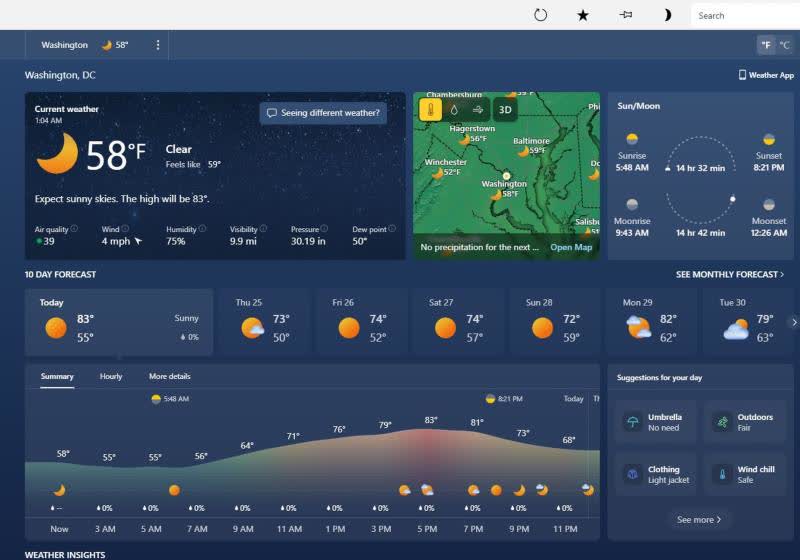
Microsoft's default Weather app for Windows 11 can consume up to 1.2 gigabytes of RAM, even when left idle on a forecast screen, according to testing by Windows Latest. This level of memory usage is revealed through the app launching nine Chromium-based subprocesses, indicating it likely relies on a web wrapper instead of a fully native application.
This design choice, while modern and providing a comprehensive set of tools including live radar, hourly forecasts, wind and precipitation data, air-quality readings, and moon phases, explains the high resource demands. The app uses data from multiple weather providers, with Foreca being a primary source, and presents a clean and smooth interface.
However, it lags significantly compared to Apple's Weather app on macOS, which uses only about 250 MB of RAM for similar functionalities. The Windows app also displays advertisements, such as ones for Adobe Acrobat, LendingTree, and Spotify, which may be a point of contention for users who have already purchased a Windows license.
This issue comes at a time when Microsoft has been openly discussing Windows 11 performance improvements. The company recently relaxed its recommendation for 32 GB of RAM for gaming PCs and stated that Windows 11 is designed to run smoothly on systems with 8 GB of memory. An app using nearly 1.2 GB of RAM would take up roughly 15% of the system's available memory on an 8 GB machine, which is a substantial share for an application users might only open to check the temperature or forecast.
Microsoft has acknowledged the need to improve performance, reliability, and memory use across Windows 11, and has hinted at updating the apps included with the operating system, particularly with the shift toward WinUI-based development. However, it remains unclear if this includes the MSN-branded services like Weather and News, which are currently part of the Windows experience.
Despite its polished visuals and extensive forecast data, the browser-based structure of the Weather app, combined with its high memory usage and ads, presents a less-than-optimal experience for a default desktop application.
Written by urgent.news from TechSpot's reporting — not their text. Machine-written — may contain errors; check the original before relying on it.