📈 Making sense of the AI capex logjam
Bought now, billed later
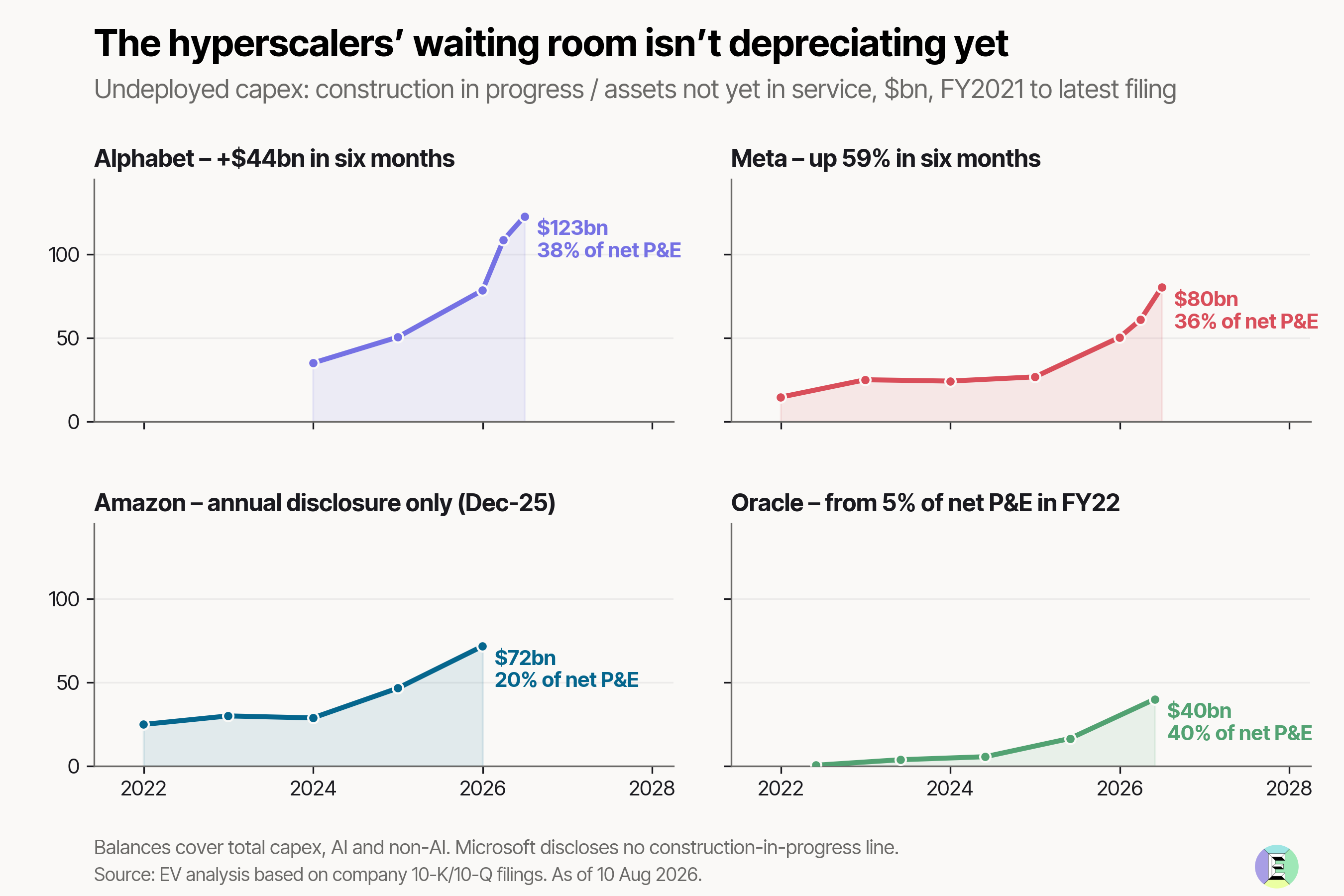
The seven largest AI infrastructure builders anticipate a significant increase in capital expenditure (capex) for 2026, with projected spending reaching $863 billion. This represents an 88% rise from the previous year. According to estimates, about two-thirds of this investment, or $550 billion, will be allocated to AI-related projects.
However, it's important to note that these expenditures do not immediately impact earnings due to the capitalization of costs on the balance sheet as construction in progress. Depreciation only begins once the assets are ready for their intended use. Across the four hyperscalers that disclose this information, assets not yet in service total $315 billion, up from $281 billion a quarter earlier.
This figure represents both capacity yet to come online and a reserve of future depreciation that has not yet been reflected on the income statement. The timing of when these investments translate into actual service differs among companies. For Meta, a dollar spent on capex waits for roughly 1.7 years before becoming operational, which is a year more than in the fiscal year 2024.
Consequently, for every dollar spent today, only around a third will be ready for service within the year. These trends are observed among others as well, though to a lesser extent.
Written by urgent.news from Exponential View's reporting — not their text. Machine-written — may contain errors; check the original before relying on it.