Italy’s record-low Po River forces farmers to weigh crop switch
The river's climate change-fueled violent swings between flood and drought is also forcing industries to compete for a resource they once took for granted.
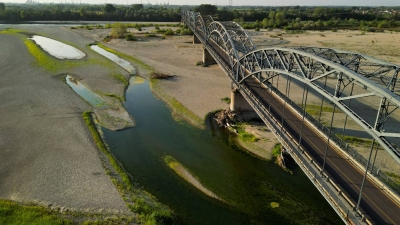
The Po River, the backbone of Italy's industrial economy, is experiencing record-low levels that have farmers grappling with difficult decisions. Massimo Salvagnin, a farmer near the Po River delta, is unsure whether to sow his green bean seeds due to the scorching heat, which could potentially destroy the seeds before they can germinate. Across northern Italy, industries reliant on the river are facing a dilemma as the water supply becomes increasingly unpredictable due to climate change.
With the Po River sinking to record lows, farmers like Salvagnin must consider switching to crops that require less water. The river, which supports nearly 900 hydropower plants and accounts for 41% of Italy's GDP and 32% of its agricultural production, is now a source of contention. Coastal and inland regions are competing for the limited water supply, with some areas relying on pumps and canals to manage the fluctuating water levels.
The Po River, once a consistent source of water, now poses a challenge to farmers and industries that have built their operations on the assumption of a reliable water supply. Salvagnin, who introduced precision agriculture techniques at his family farm, is adapting to the changing conditions but acknowledges the need for more comprehensive planning. The river's unpredictable behavior, driven by climate change, has forced farmers and industries to rethink their strategies and reconsider how they manage water resources.
Written by urgent.news from Japan Times's reporting — not their text. Machine-written — may contain errors; check the original before relying on it.