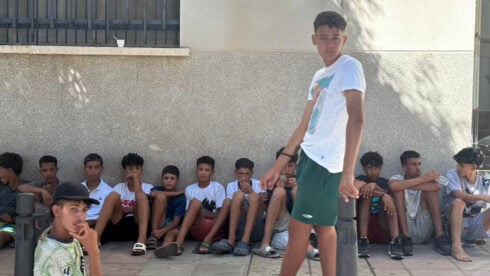
Inside Ceuta: thousands of migrant children on the pavement – and thousands more in the hills
A WEEK after almost 72,000 people crossed into Spain’s African enclave, Jon Clarke finds thousands of children sleeping rough and a city struggling with the scale of the crisis.
The Ceuta crisis is a multifaceted issue that extends beyond migration concerns. The Spanish enclave of Ceuta, situated on the North African coast, has been the subject of a protracted territorial dispute between Morocco and Spain. Situated in the Maghreb region, Ceuta and its neighboring enclave Melilla have been contested for centuries, with Morocco asserting its sovereignty over these cities while Spain contends that they are integral to its national territory, akin to Madrid.
The origins of this conflict trace back to the 15th century when Moroccan and Al-Andalusian Muslim dynasties controlled Ceuta before it was captured by King John I of Portugal in 1415. Following Portugal's integration into the Spanish Habsburg monarchy in 1580, Ceuta became part of Spain. However, when Portugal regained its independence in 1640, the city remained committed to the Spanish crown.
Fernand Braudel, a prominent French historian, underscored the Mediterranean as a historically interconnected region, shaped by migratory patterns, commercial activities, and cultural exchanges.
Today, the presence of over 72,000 individuals crossing into Ceuta from Morocco highlights the precarious nature of this border, emphasizing the complexity of the territorial dispute that transcends mere migration issues.
Written by urgent.news from The Korea Times's reporting — not their text. Machine-written — may contain errors; check the original before relying on it.
This story
This is one outlet's version. Read the fullest account.
- The Ceuta crisis is about more than migration koreatimes.co.kr
- Ceuta leader wants detention centre as Spain's migrant crisis worsens thelocal.es
- Ceuta leader wants migrant detention centre after mass influx from Morocco euronews.com
- Spain’s abandoned dog crisis grows as traffickers cash in on cheap imported puppies euroweeklynews.com
- Ceuta mayor calls for migrant detention amid mass influx crisis aljazeera.com