Hoover Dam submerged a town in 1935; Lake Mead is revealing it again
The receding waters of Lake Mead have unveiled the eerie remnants of St. Thomas, a ghost town in Nevada. Originally a thriving Mormon settlement founded in 1865, it was swallowed by rising waters after the Hoover Dam was built in 1938. Now, the lakebed displays its foundations, allowing history enthusiasts a rare opportunity to connect with a bygone era of agricultural significance.
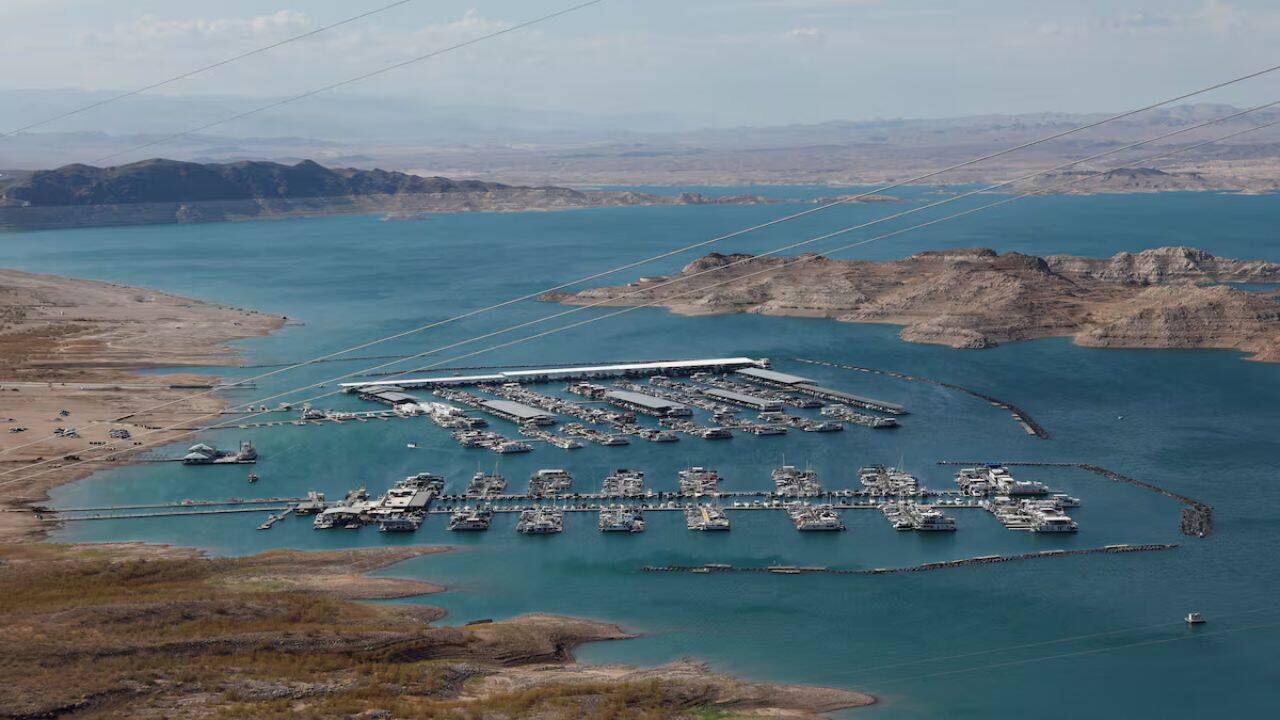
In 1935, the Hoover Dam's water levels triggered the reemergence of an old ghost town located beneath 60 feet of water. St. Thomas, a Mormon settlement, was formed in 1865 by settlers who believed they had discovered valuable land near the Muddy River. Initially, the settlers aimed to grow cotton and establish a supply route, but soon discovered the harsh living conditions and economic difficulties.
By 1918, the town had grown to around 500 residents and boasted various businesses, including a grocery store, cafe, hotel, school, post office, and stores. However, in 1928, the construction of the Hoover Dam threatened the town's existence. After residents were compensated and gradually left, Lake Mead began filling up in 1935.
The town's last resident, Hugh Lord, left in June 1938, when the water reached his home. At its highest point, the town's tallest building was submerged 60 feet below the lake's surface, with its ice cream parlour and school classrooms now underwater. St. Thomas reappeared in 2002 when Lake Mead's water levels dropped significantly, revealing the town's streets, foundations, and remnants of its buildings.
Today, visitors can walk along the former streets of St. Thomas when water levels permit, allowing them to explore the town that was once considered lost forever.
Written by urgent.news from Times of India's reporting — not their text. Machine-written — may contain errors; check the original before relying on it.