Drought dries major European rivers to record lows
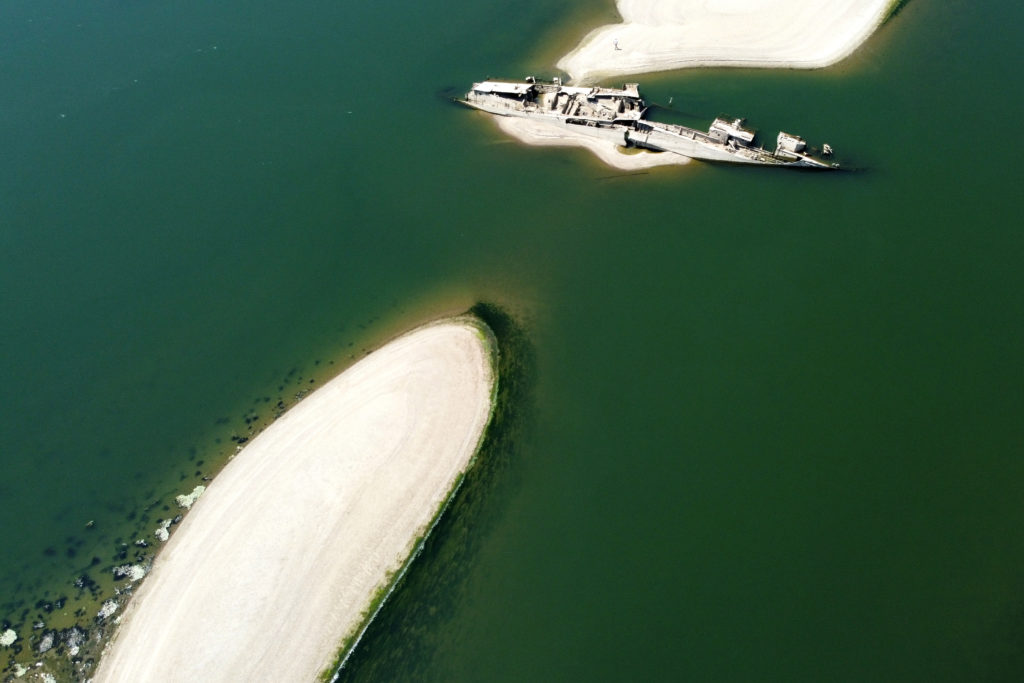
Vast tracts of many of Europe's largest rivers, including the Rhine, Rhone and Danube, have slowed to a trickle never before recorded in July, data from a European climate observatory showed Monday.

Europe's largest rivers, including the Rhine, Rhone and Danube, have plummeted to record low levels this July, according to data from a European climate observatory. Measurements revealed that 95% of monitored sections of the Thames, 85% of the Rhine, and roughly two-thirds of the Danube exhibited the weakest July discharge since at least 1992 when record-keeping began. The Rhone also saw record lows along 30% of its length, as did Italy's main river, the Po, along 40% of its course.
The drastic decline in water levels is attributed to an unusually warm early summer across western Europe, characterized by frequent heatwaves, persistent drought, and destructive forest fires, all of which scientists have directly linked to climate change. European Flood Awareness System (EFAS) data enables tracking of water flow changes in rivers wide enough, including in regions without measuring stations. The figures for the aforementioned rivers commence several dozen kilometers downstream from their sources.
Another drought indicator, published bi-weekly by the European Drought Observatory (EDO), further underscores the alarming condition of Europe's waterways this summer. The EDO compares observed flow rates with historical data and categorizes them according to the severity of drying, ranging from moderate deficit to the most severe drought.
According to AFP, the Rhine has been in the worst drought condition nearly continuously since early June along most of its course from the Swiss mountains to western Germany. The Danube also suffered severely, particularly in the Hungarian segment, forcing the Hungarian government to consider shutting down their only nuclear power plant which relies on the Danube's water to cool its atomic reactor.
France's Loire displayed extremely low flow rates in several hundred kilometers between the second half of June and the end of July. Similarly, the Rhone faced extreme drought along a significant portion of its route from Switzerland to the Mediterranean. These major European rivers reaching record-low flows in July has adversely affected 95% of monitored Thames sections, 85% of the Rhine, and approximately two-thirds of the Danube. The prolonged low flows pose a threat to water-dependent infrastructure.
Written by urgent.news from Phys.org's reporting — not their text. Machine-written — may contain errors; check the original before relying on it.