Beyond fighter jets: India is building a new family of engines for missiles and drones
India has successfully developed a 350 kg class expendable turbojet engine for missiles. The nation also demonstrated a 5 kN thrust class rotating detonation engine. This engine technology promises faster and longer-range missile capabilities. These advancements position India among select nations with advanced propulsion systems. Future applications include drones and launch vehicle upper stages.
India is advancing beyond fighter jet engines, focusing on a new family of engines for missiles and drones. The Defence Research and Development Organisation's (DRDO) Gas Turbine Research Establishment (GTRE) has successfully developed a 350kg class expendable turbo jet engine. This small turbofan engine is used in cruise missiles, such as India's LR-LACM, and jet-powered loitering munitions. India's military has ordered 106 Agniveg jet-powered loitering munitions for precision strikes.
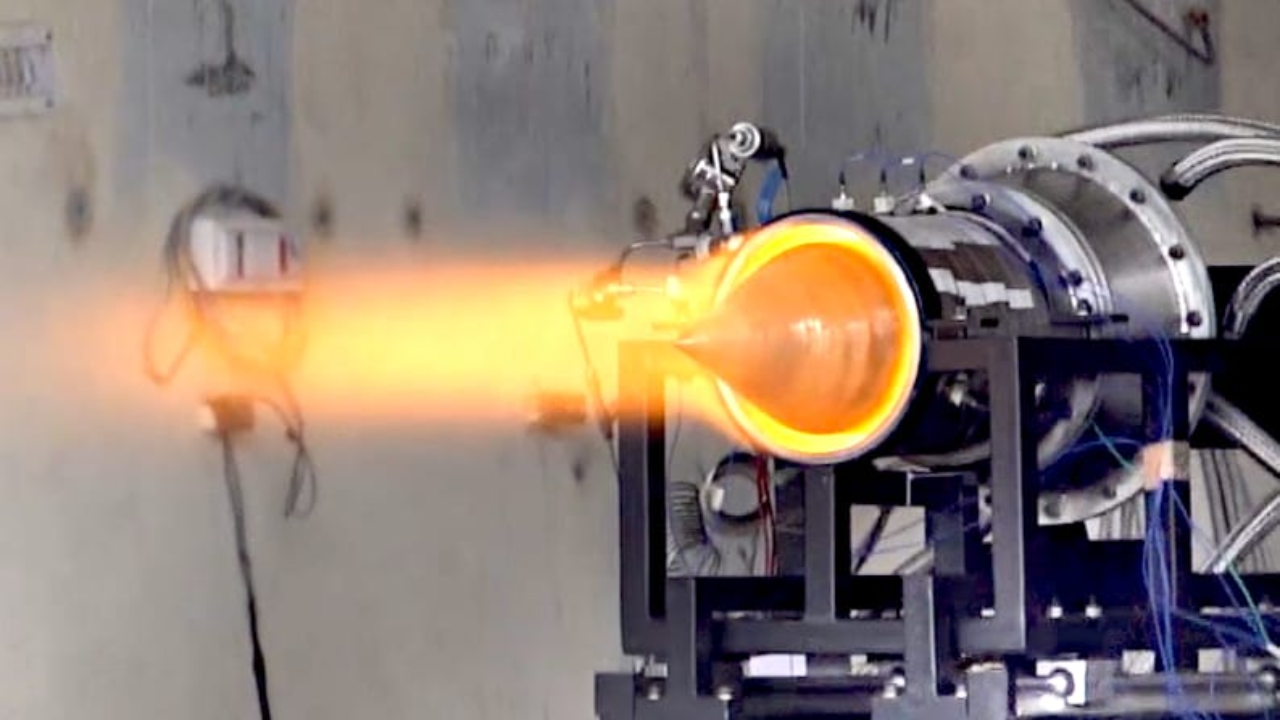
India has now reached a significant milestone with the demonstration of a 5 kN rotating detonation engine (RDE) by private firm D-Propulse. This achievement marks a major departure from previous lab experiments and places India among a select few nations capable of this technology. RDEs promise significant efficiency gains, leading to lighter and faster platforms, reduced launch platform footprint, and longer loiter times.
The technology could revolutionize supersonic cruise missiles, tactical missiles, and even high-altitude drones. While challenges remain, the successful 5 kN test demonstrates confidence in scaling and thermal management, bringing India closer to indigenously powering missiles and drones with this cutting-edge technology.
Written by urgent.news from Times of India's reporting — not their text. Machine-written — may contain errors; check the original before relying on it.