Are parts of the memory trace found in the ‘astroengram?’
Neurons have long taken top billing in memory, but researchers are making the case for astrocytes.
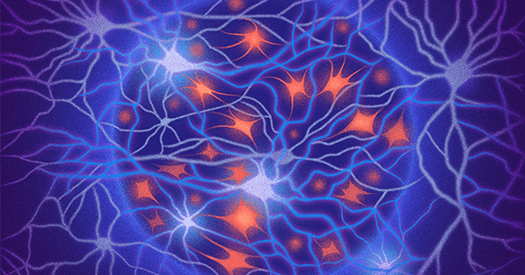
Astrocytes, once thought to simply support neuronal function in the brain, may play a crucial role in memory formation and recall, according to recent research. Marta Navarrete, a principal investigator at the Cajal Neuroscience Center, introduced the concept of the "astroengram" in a 2023 Nature Reviews Neuroscience Perspective.
She and her team found that a specific subset of astrocytes in the nucleus accumbens, a brain region that processes reward signals, becomes active during learning and is necessary for memory. When Navarrete's team reactivated these astrocytes using a tool called AstroLight, mice showed a stronger preference for a dispenser they had previously associated with sugar water.
Conversely, silencing the same astrocytes led the mice to distribute their preference evenly between the dispensers. Similar findings were observed in fear conditioning studies, where manipulating astrocytes changed mice's behavior in ways linked to memory. However, the role of astrocytes in memory is still debated, with some researchers arguing that neurons remain the core of the engram.
Written by urgent.news from The Transmitter's reporting — not their text. Machine-written — may contain errors; check the original before relying on it.