A Slow-Moving Humpback Led a Drone Pilot to One of the Rarest Whale Births Ever Filmed
Learn how footage captured off Kingscliff, New South Wales, may be the first complete humpback whale birth filmed from the air.
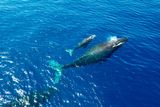
Drone pilot Alexander Forrest captured an extremely rare event as he observed a migrating humpback whale giving birth to a calf off the coast of New South Wales, Australia. The slow-moving female whale, approximately 2,300 feet from Kingscliff, displayed signs of rest before the water turned red, signaling the arrival of the newborn. This marks only the fourth complete birth ever filmed on film, according to the Organisation for the Rescue and Research of Cetaceans in Australia (ORRCA).
Forrest, conducting aerial observations for ORRCA, noted that he had never witnessed a birth during his thousands of aerial humpback encounters. The drone remained at a safe distance of over 330 feet from the whales, complying with New South Wales regulations. After the birth, the calf and mother came together, allowing the team to observe the mother tending to her newborn as the calf took short periods underwater.
Humpback whales typically pass the eastern coast of Australia during their winter migration, traveling from Antarctic feeding grounds to warmer breeding waters off New South Wales and Queensland. This 6,200-mile journey spans roughly half their yearly round-trip. While humpbacks often attract observers worldwide, documented births are exceptionally rare.
The filming of this birth has raised questions about humpback calving areas. While it was once believed that humpbacks needed to reach tropical waters before giving birth, a study in Frontiers in Marine Science found that some newborns have been observed as far south as Port Arthur, Tasmania, about 930 miles beyond the previously reported southern boundary of eastern Australia's calving range.
The study, led by University of New South Wales Ph.D. candidate Jane McPhee-Frew, analyzed over 200 records of newborn humpbacks around Australia and New Zealand. Researchers concluded that mothers frequently continued migrating after delivering their calves, with all 94 mother-calf pairs in New South Wales heading north after the birth. This suggests that a calf's arrival does not necessarily signal the end of the migration journey.
The findings could potentially impact how these temperate waters are managed. Some areas where newborns have been recorded are not currently recognized as calving habitat, even though young calves may pass through cities and shipping lanes during their first weeks of life. While a single recording does not definitively prove a shift in calving areas, it adds to a growing body of evidence showing that calves can arrive before their mothers reach tropical waters.
Written by urgent.news from Discover Magazine's reporting — not their text. Machine-written — may contain errors; check the original before relying on it.