72% of Hong Kong professionals regularly use AI, double global average: survey
More than 70 per cent of Hong Kong working professionals use artificial intelligence (AI) tools on a daily or weekly basis, more than double the global average, but junior staff also harbour deeper anxiety over job security amid its growing adoption, a survey has found. The study conducted by the Hong Kong University of Science and Technology (HKUST) surveyed 3,722 working professionals in the…
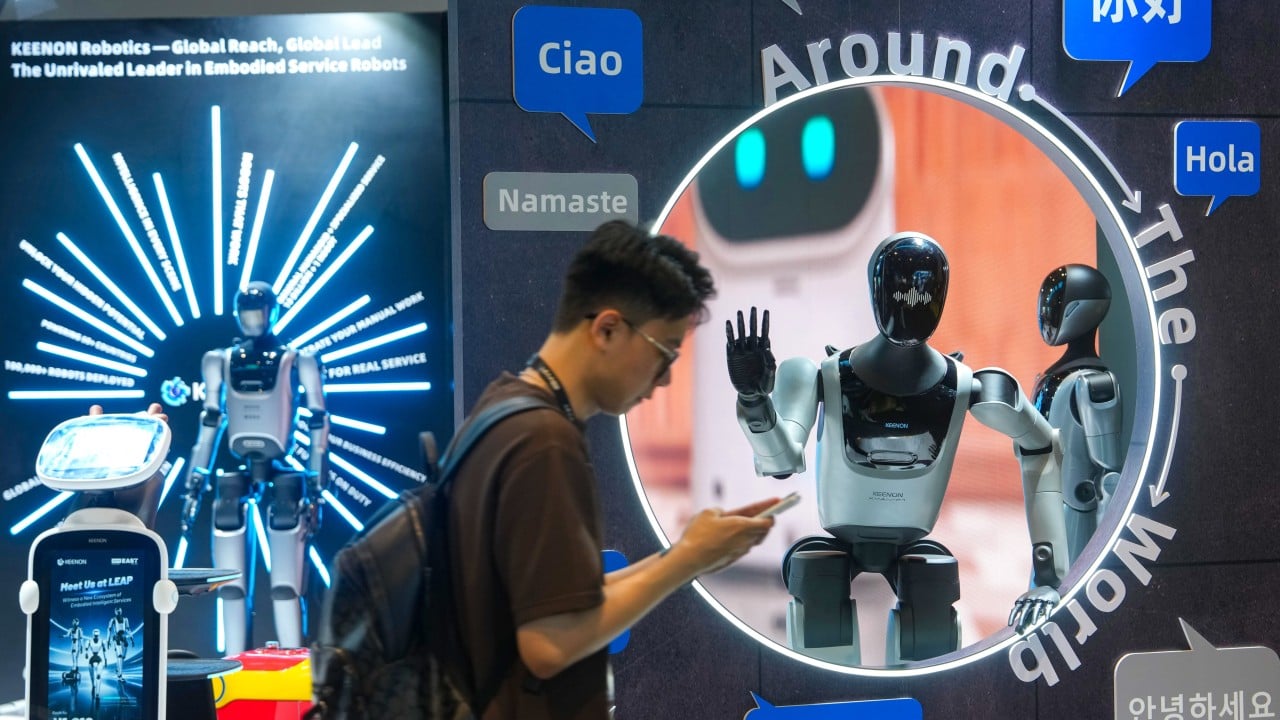
A recent survey by the Hong Kong University of Science and Technology found that over 70% of Hong Kong's working professionals regularly utilize artificial intelligence (AI) tools, more than twice the global average. Junior staff, however, express greater anxiety about job security as AI adoption increases. Conducted between March and April, the survey polled 3,722 professionals aged 30 to 49, with more than 60% using AI daily or weekly, compared to a global average of 31%.
Generative AI tools like ChatGPT and Copilot were most commonly used for drafting documents, summarizing information, and creative work. Nevertheless, only about a quarter of users employ advanced AI applications such as data analytics and image generation. Concerns about job security were highest in media and communications, financial services, and scientific and technical services industries.
Despite extensive AI usage, nearly 60% of respondents had not received AI training, and 73% were unaware of relevant government policies. Professor Tam Kar-Yan, HKUST's vice-president for administration and business, noted that Hong Kong's workplaces entered a new AI phase where the tool became integral to daily work. He emphasized that while job replacements have not occurred yet, most companies were in the initial stages of adoption.
To ensure workforce resilience, Tam suggested targeted AI training tailored to specific job functions and encouraged employees to communicate with supervisors to participate in reskilling opportunities. Graduate Louis Vuitton management trainee Agnes Lam Chiu-ki stated that her company's AI platform, "MalA", assists with translation, product info consolidation, and visual content creation.
However, she noted that personal interaction remains essential in retail, where roles like customer service enable emotional support and understanding that AI cannot replicate. Fellow graduate Niki Ho Sze-nok from Deutsche Telekom echoed this, highlighting AI's role in handling time-consuming tasks, allowing her to focus on tasks requiring human interaction and strategic thinking, suggesting AI complements rather than replaces human specialists.
Written by urgent.news from South China Morning Post's reporting — not their text. Machine-written — may contain errors; check the original before relying on it.