What Happens During a Production Deployment? A Behind-the-Scenes Guide
Deployment pipelines involve builds, artefacts, migrations, health checks, and rollbacks — here's why most teams should hand that machinery to a PaaS.
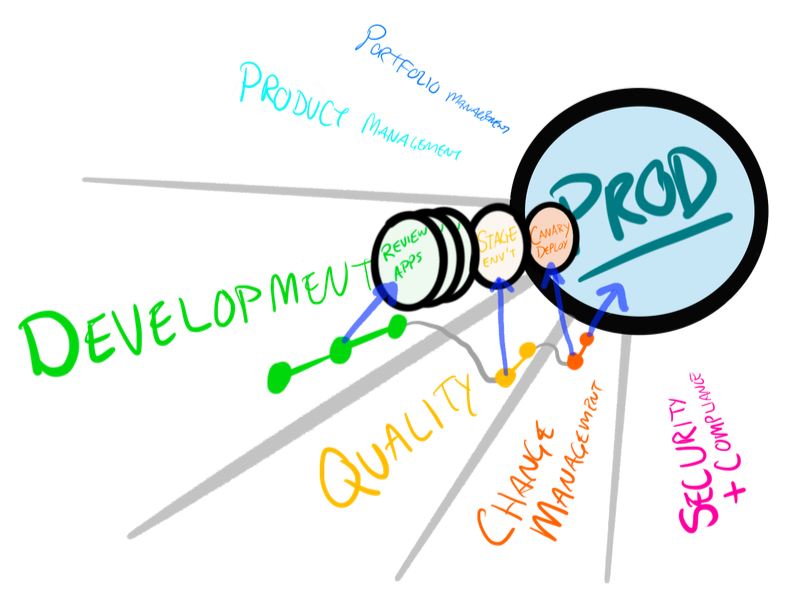
The production deployment process involves several critical stages that ensure new software versions are safely introduced to users. After pushing code changes, the first step is the build, where the compiler or bundler transforms source code into executable binaries or executable packages. This stage runs automated tests, including unit tests, linters, and security scans, halting the process if any issues are detected.
The resulting artefact is a frozen, versioned snapshot of the application, representing a consistent state ready for deployment.
The artefact undergoes database migrations, which alter the application's data schema. These migrations are risky because corrupting data during deployment can be irreparable. Good practices require migrations to be reversible, ensuring that if a mistake occurs, the database can be restored to its previous state. A Platform-as-a-Service (PaaS) handles this process automatically, running migrations in order and logging each step to prevent human error.
Health checks are crucial to verify that the new version of the application is ready to handle traffic. Health checks consist of readiness and liveness checks, ensuring the application is both ready to receive requests and operational. If the checks fail, the deployment process halts, preventing live traffic from being sent to an unstable version.
Rolling updates replace old instances of the application with new ones incrementally. This method ensures that the application remains available during updates, as only a subset of instances is replaced at any given time. This approach minimizes downtime and risk, allowing updates to be rolled back if a problem arises, thanks to the versioned artefacts and health checks in place.
While teams can manage these deployment stages themselves, it consumes significant engineering time and resources—efforts that could be better spent developing features. PaaS platforms automate these processes, reducing costs and operational overhead by handling builds, artefact management, database migrations, health checks, and rolling updates, thereby allowing teams to focus on innovation rather than infrastructure maintenance.
Written by urgent.news from HackerNoon's reporting — not their text. Machine-written — may contain errors; check the original before relying on it.