Ukraine Found a Cheap Answer to Shaheds. Ballistic Missiles Are the Next Challenge
Ukraine has learned how to counter large-scale Shahed attacks with relatively cheap interceptor drones, changing the economics of air defense. But ballistic missiles remain a fundamentally different problem — and the strikes of July showed just how exposed Ukrainian cities remain to this threat. On the night of July 6, Russia launched 29 ballistic missiles at Ukraine alongside several hypersonic…
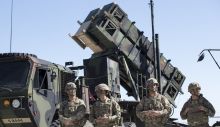
Ukraine has devised an affordable solution to combat large-scale Shahed attacks using interceptor drones, transforming air defense economics. However, ballistic missiles present a fundamentally different challenge – as evidenced by the July 6 Russian strikes, which saw none of the 29 missiles intercepted. The attack killed over 20 people in Kyiv, underscoring Ukraine's vulnerability to such threats.
Ukraine's dilemma lies in balancing its efficient drone defense with the scarcity and high cost of missile-defense systems like the American Patriot and Franco-Italian SAMP/T. The July attacks revealed Kyiv's limited resources in defending against ballistic missiles' rapid acceleration and steep trajectories, giving defenders little reaction time.
This has prompted Kyiv to increasingly seek European assistance in missile defense. President Zelenskyy stressed the need for reliable, affordable interceptors to sustain air defense. The European Union is now exploring alternatives to solely relying on expensive American systems, with Ukraine leading the Freya project to develop a cost-effective European missile-defense capability.
Freya, based on the Fire Point FP-7 interceptor family, aims for affordability through mass production. Unlike expensive, limited American interceptors, Freya seeks a cheaper system Ukraine could manufacture in larger quantities. European defense companies are already involved, including Germany's Hensoldt, Sweden's Saab, and France's Thales and Safran.
Ukraine's combat experience against Russian ballistic and hypersonic weapons further bolsters this initiative. The US has agreed to license produce Patriot interceptors for Ukraine, creating a dual path: expanding access to expensive American systems while developing a cheaper European-Ukrainian alternative. The Freya project's significance lies not in a new defense system, but its economic model.
The war has shown that even sophisticated defenses falter without enough interceptors to sustain them. Ukraine's experience with interceptor drones against low-cost Shaheds proves defense becomes more sustainable when interception costs align with the incoming threat's cost. For Europe, Russia's missile arsenal poses a threat to the entire security architecture, and the war in the Middle East demonstrated how quickly missile warfare can strain existing stocks.
Written by urgent.news from UATV English's reporting — not their text. Machine-written — may contain errors; check the original before relying on it.