‘This is what’s working’: Indigenous leaders on environment solutions in their communities
Eriberto throws his head back with a laugh and shakes it as he tills his plot of land in the Peruvian Amazon, near the Cordillera Azul National Park in central Peru. “That does not work here,” he says with a chuckle, responding to a question about why he doesn’t call his diverse forest garden “agroforestry”. […]
Eriberto, an Indigenous farmer in Peru's Amazon, shares his experience with sustainable farming that has benefited his community for over a decade. Unlike government-promoted agroforestry systems that focused on monoculture crops like coffee or cacao, Eriberto cultivates a diverse range of species in his forest garden, which includes traditional plants, trees, and other food crops.
This approach, he explains, ensures that if one crop fails or doesn't perform well in the local market, others can compensate, providing a more resilient and sustainable food source for his family.
Eriberto's forest garden has attracted endemic bird species and wildlife researchers, demonstrating its ecological value beyond its practical benefits for his family. In an interview marking the International Day of the World's Indigenous Peoples, Eriberto highlights the success of this approach as a model for biodiversity conservation and climate solutions implemented by Indigenous communities around the world.
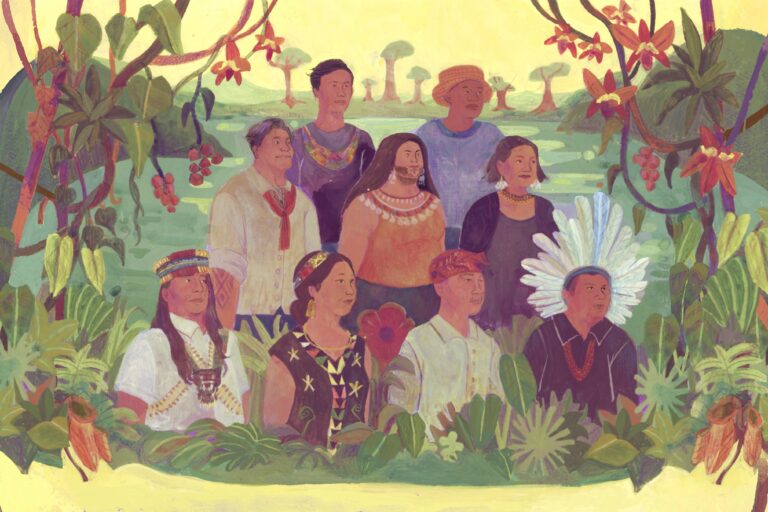
The article features interviews with nine Indigenous representatives from diverse backgrounds and regions, demonstrating the variety of solutions being employed to address environmental challenges. Frengky Sabbattilat, Ismael Saumanuk, and Vincent Tateburuk, all part of Malinggai Uma Tradisional Mentawai, share their experiences and insights, further illustrating the importance of localized, community-led initiatives in biodiversity conservation and climate action.
Written by urgent.news from Mongabay's reporting — not their text. Machine-written — may contain errors; check the original before relying on it.