The total solar eclipse on Aug. 12 will reveal something nobody has ever seen before
A naked-eye view of the sun's outer atmosphere is the reason eclipse chasers travel the world. Here's what it may look like on Aug. 12.
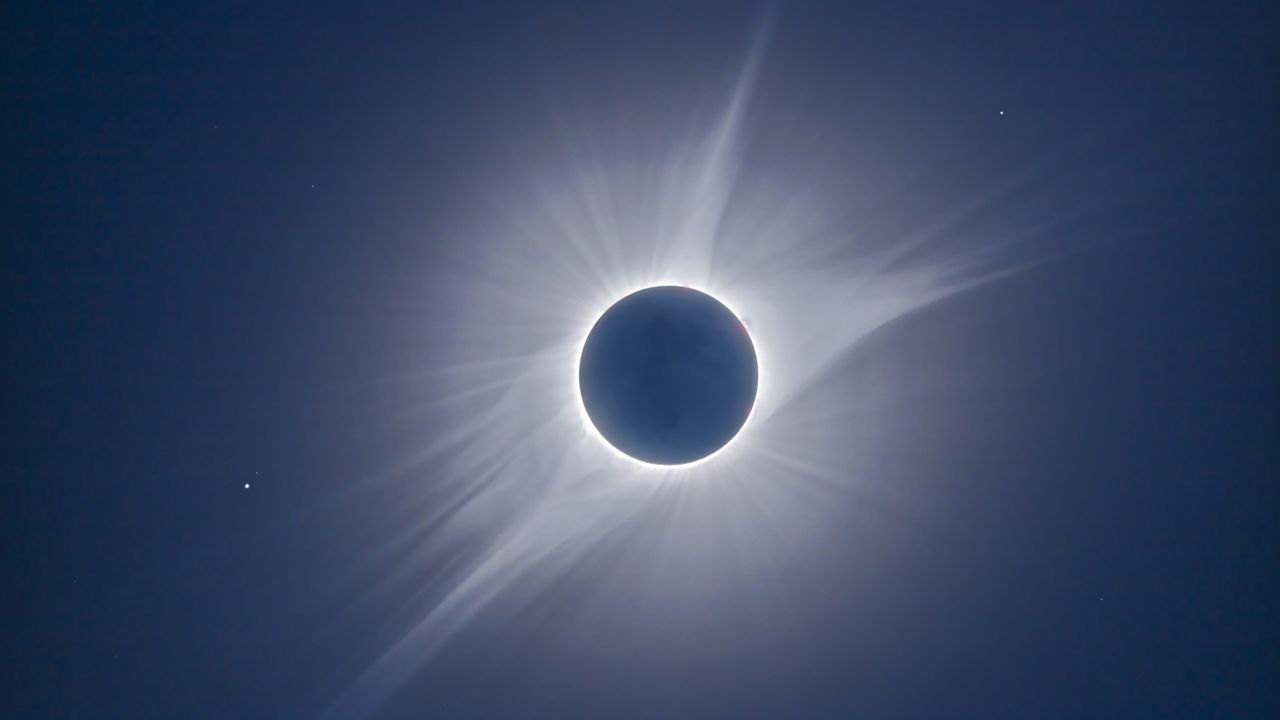
A total solar eclipse on August 12, 2026, will provide an unprecedented view of the sun's corona, a phenomenon that has never been captured before. Unlike the moon's silhouette, the corona—a crown-shaped extension of the sun's atmosphere—emerges only during totality, revealing delicate, spiky white tendrils shaped by the sun's ever-changing magnetic field.
As Ryan French, a solar physicist, explains, the corona is created by hot plasma trapped by the sun's magnetic field, which fluctuates with the sun's 11-year activity cycle. During solar maximum, the corona appears more complex, with numerous sunspots and features like sunspots producing striking streamers and prominences. However, as the cycle declines, the corona becomes less active, making the 2026 eclipse an intriguing opportunity to observe a unique snapshot of the sun's corona during the transition phase.
While not at its peak or its lowest point, the 2026 eclipse promises to offer a glimpse into the sun's dynamic and ever-evolving magnetic environment.
Written by urgent.news from Space.com's reporting — not their text. Machine-written — may contain errors; check the original before relying on it.