Trump said on the 5th (local time) that he would respond to Iran with "a lock" but did not specify what that meant. It appears that the Trump administration intends to put more economic pressure on Iran rather than taking military action. In a tweet on the 5th, President Trump said, "The United States will respond to the attack by the Quds Force and other Iranian forces on Saudi Aramco facilities with a 'lock'," adding, "We are waiting for identification from Saudi Arabia." On the 14th of last month, there was an attack on Saudi Aramco's Abqaiq oil processing facility and the Khurais oil field in eastern Saudi Arabia. The US and Saudi Arabia have accused Iran of being behind the attack. At a press conference on the 4th, President Trump said, "The United States is prepared to defend our interests and our allies, but we will seek a peaceful solution." On the 3rd, the US Treasury Department announced that it had imposed sanctions on the Central Bank of Iran and other Iranian financial institutions. In a speech at the United Nations General Assembly on the 25th of last month, President Trump urged Iran to come to the negotiating table, saying, "The Iranian regime can either choose a path of meaningful diplomacy or more sanctions."
President Donald Trump suggested that the United States would respond to Iran with economic pressure rather than military action. In a phone call on the 9th (local time) with Axios, Trump stated, "We are engaging in a low-key response." "We are negotiating with them half as much as we should," he added, noting that Iran is experiencing hyperinflation and has no money.
The president emphasized that the US economic blockade against Iran had exacerbated the country's economic crisis, causing oil prices to drop slightly to around $75 per barrel (according to the Western Texas Intermediate standard), alleviating some suffering among American consumers. Trump declared that a resolution between Iran and the US would be "great.
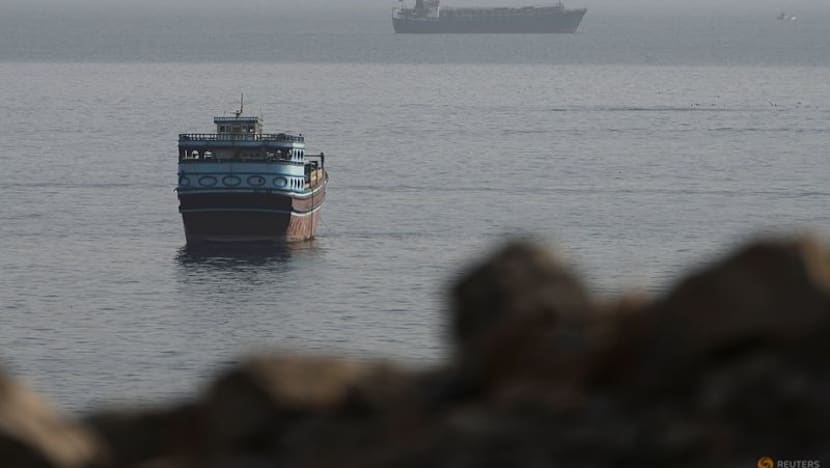
It's always been great. It's like a chess game." Recent negotiations between Iran, Oman, and the United States regarding the Hormuz Strait's passage have been ongoing for several days. The agreement, which had not occurred before, would grant Iran partial control over the strait for the first time. However, the outlook for the agreement, announced by Qatar and Pakistan mediators early on, has become uncertain due to internal disagreements within the Iranian regime.
The head of Iran's Supreme National Security Council, Mohammad Bagher Ghalibaf, issued a statement demanding six conditions for opening the strait: △ sanctions against Iran, an end to Iran and its allies' war, the lifting of the US blockade on Iran, compensation for damages caused by the war, and the release of frozen assets and restrictions on Iran's sanctions.
Earlier, Iran presented these conditions as preconditions for nuclear talks, but now, it has raised the bar by making them part of the deal to open the Hormuz Strait. A foreign diplomat noted that Ghalibaf's statement reflects internal political disputes within the Iranian regime. President Trump canceled a large-scale attack on Iran at the request of Middle Eastern countries on the previous night and urged a rapid resolution to reopen the Hormuz Strait.
Following the announcement, negotiations between Iran and Oman regarding the reopening of the Hormuz Strait were close to reaching an agreement, but recent reports indicate that Iran has presented new demands to the mediators, making the outcome of the negotiations uncertain once again. Iran's Foreign Minister Abbas Araghchi met with journalists in Tehran, saying that as long as the mediators continue to push for an end to the US violations of the agreement and compensations for violations, "there is no possibility of re-engaging in negotiations."
Written by urgent.news from Hankyoreh's reporting — not their text. Machine-written — may contain errors; check the original before relying on it.