Urgent.News

What's breaking now, across thousands of outlets.

Finance & Markets

Have 'debt repayment difficulties' been resolved?... Bank overdrafts and other personal loans delinquency rates increased significantly

Translated from Korean Read in Korean

South Korean banks saw a significant surge in non-performing loans (NPLs) in 2022, with the NPL rate reaching 0.22% by the end of June. This marks the first time that this metric has been verified with such precision. Younger borrowers, aged 20 and below, and older borrowers, aged 60 and above, exhibited particularly concerning levels of NPLs. The younger demographic saw a 0.33% rate, while the older demographic had a 0.37% rate.

The NPL rate for the five major banks - KB Kookmin, Shinhan, Hanara, UIG, and NH Shinhan - increased from 0.18% at the end of last year to 0.22% at the end of June. This represents a 0.04 percentage point rise. The total NPL amount has grown from 39.9 trillion won at the end of last year to 43.3 trillion won by the end of June, a 8.5% increase. This jump in NPLs has been driven by customers who have maxed out their credit limits, resulting in banks not being able to make interest payments, which are then recorded as NPLs.

The total NPL amount held by the five banks reached 43.3 trillion won by the end of June, an increase of 0.33 percentage points from the same period last year. However, the rate of increase in NPLs was far outpacing the increase in total loan amounts. While loan amounts grew by 3.6% to 107.1 trillion won, NPLs surged by 19.4% to 3,750 billion won. This discrepancy highlights the severity of the situation.

Written by urgent.news from Hankyoreh's reporting — not their text. Machine-written — may contain errors; check the original before relying on it.

Read the original at hani.co.kr →

More in Finance & Markets

The outstanding balance of stock-backed loans is concentrated in the elderly, with 63% of the total, and it is also expected that the loss due to the stock market adjustment will be concentrated in this group. According to the Korea Financial Telecommunications and Clearings Institute on the 22nd, the outstanding balance of stock-backed loans at the end of last month was 16.2 trillion won, with 10.2 trillion won, or 63%, being borrowed by those in their 60s and older. By age group, those in their 50s had 3.4 trillion won, and those in their 40s had 1.3 trillion won. Those in their 30s or younger had 300 billion won. The stock-backed loan is a loan service in which stock as collateral is used to lend money. The number of stock-backed loan users has rapidly increased since the Corona 19 outbreak. The balance of stock-backed loans has also increased rapidly, from 2.6 trillion won at the end of 2019 to 7.7 trillion won at the end of 2020, and then to 16.2 trillion won at the end of last month. The rapid increase in stock-backed loans is due to the increase in stock prices and the increase in collateral value, but experts say that if stock prices fall, the stock-backed loan may not be able to repay the loan if the stock price falls. In particular, the stock-backed loan users are concentrated in the elderly, and there is a high possibility that the stock market adjustment will cause a loss to this group. Experts say that investors should be cautious when taking stock-backed loans, saying that stock prices can fluctuate rapidly. Kim Yu-kyung, a researcher at the Korea Institute of Finance, said, "The stock-backed loan users should be aware that stock prices can fluctuate rapidly and that they can lose their investment principal." Noh Young-chan, a researcher at the Capital Market Research Institute, said, "The stock-backed loan is a service that can be used in an emergency, but it can also be a factor in increasing investment risk."

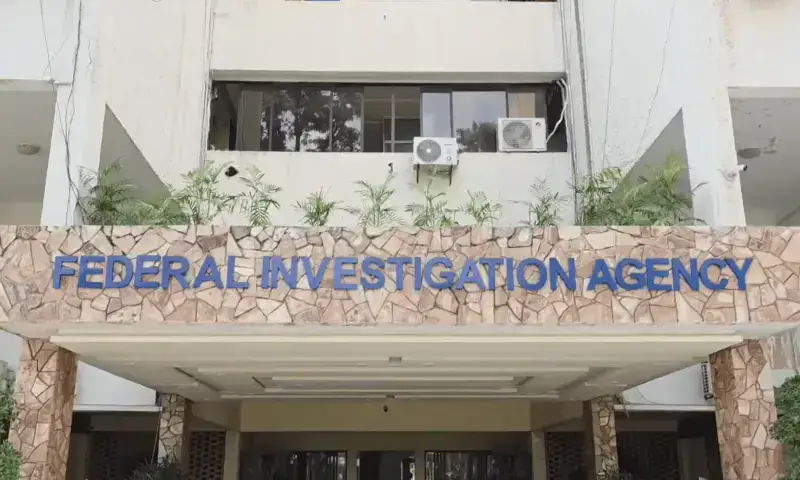
Blink Capital faces FIA fraud probe

ISLAMABAD: After investigating over 35 complaints of misappropriation of Rs446.66 million, the Securities and Exchange Commission of Pakistan (SECP) has referred the case of M/s Blink Capital…

More from Sunday 9 August →