SPD Kicks Off Tense Campaign Season in Mecklenburg-Hither Pomerania
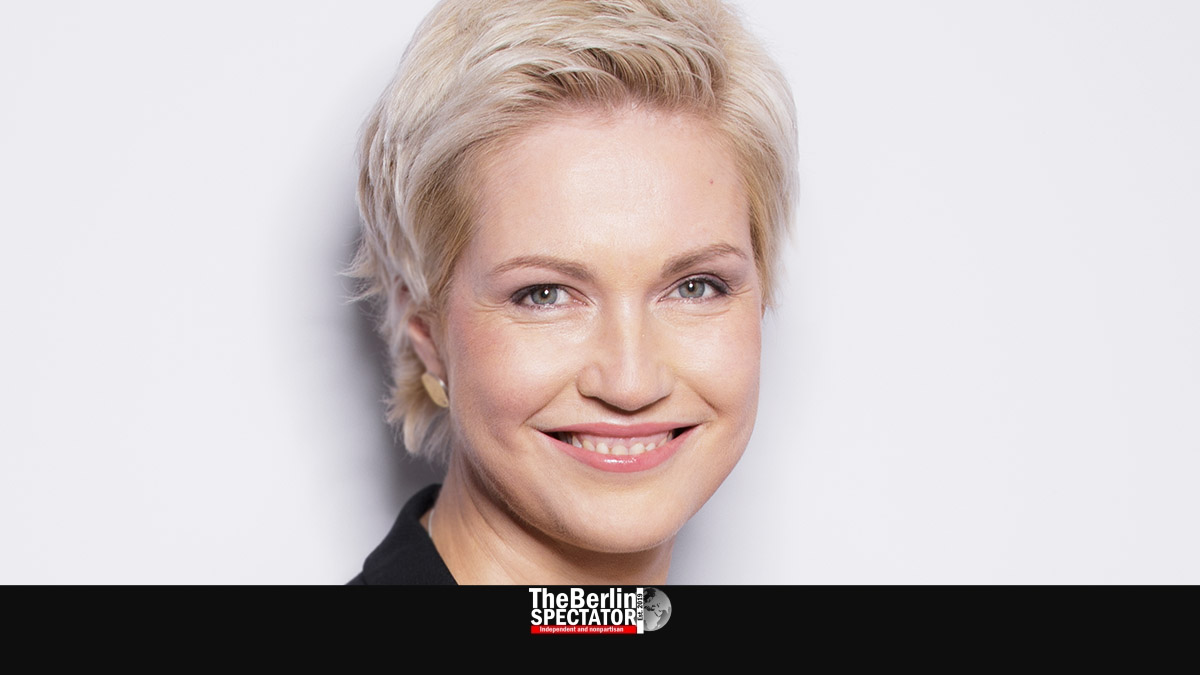
Germany's center-left Social Democrats (SPD) are banking on incumbent state premier Manuela Schwesig to carry them through September's regional election. At the campaign launch, she framed herself as something close to democracy's last line of defense.
On August 9th, 2026, the Social Democratic Party (SPD) of Mecklenburg-Hither Pomerania commenced its campaign season in Schwerin, with party leader Julian Barlen announcing the "hot phase" of the election ahead of the September 20th vote. Currently, the SPD trails behind the far-right Alternative for Germany (AfD) in polls, with the AfD holding 36 percent of the vote, the SPD at 29 percent, the center-right CDU at 9 percent, the far-left Die Linke at 12 percent, and the Greens at 5 percent.
The Bündnis Sahra Wagenknecht (BSW), a newer extremist party, holds 4 percent, and the FDP has too low a standing to be separately mentioned. This puts the AfD and SPD in a combined position to control roughly two-thirds of the electorate, challenging the traditional governing coalition that has long been in place.
Barlen framed the election as a pivotal moment for the region, urging voters to choose between continuing stable, reliable democratic governance or allowing the AfD to take over. Schwesig, who has been governing Mecklenburg-Hither Pomerania since 2017, promised subsidies to bolster small and mid-sized businesses, including extending the discounted Deutschlandticket to more young people and aiding local clubs and associations with music licensing costs.
She also vowed to block the federal pension reform in the Bundesrat and criticized Economy Minister Katherina Reiche for her stance on electricity prices not falling before 2030. Schwesig emphasized her distinct approach from the federal government and highlighted the possibility of the AfD achieving an outright majority in Saxony-Anhalt, which could allow them to govern independently.
In Mecklenburg-Hither Pomerania, democratic parties have a chance to form an anti-AfD coalition government, similar to Berlin where the AfD has doubled its support since the 2023 elections but is still not enough to form a government.
Written by urgent.news from The Berlin Spectator's reporting — not their text. Machine-written — may contain errors; check the original before relying on it.