Is China’s party newspaper carrying more stories highlighting women’s role as mothers?
“Women hold up half the sky.” This iconic quote attributed to Mao Zedong has been central to Beijing’s messaging about gender equality for decades. It was not just a slogan. After the founding of the People’s Republic in 1949, the Communist Party passed a Marriage Law that banned arranged marriages, abolished foot-binding and encouraged women to enter education and the workplace. But the party’s…
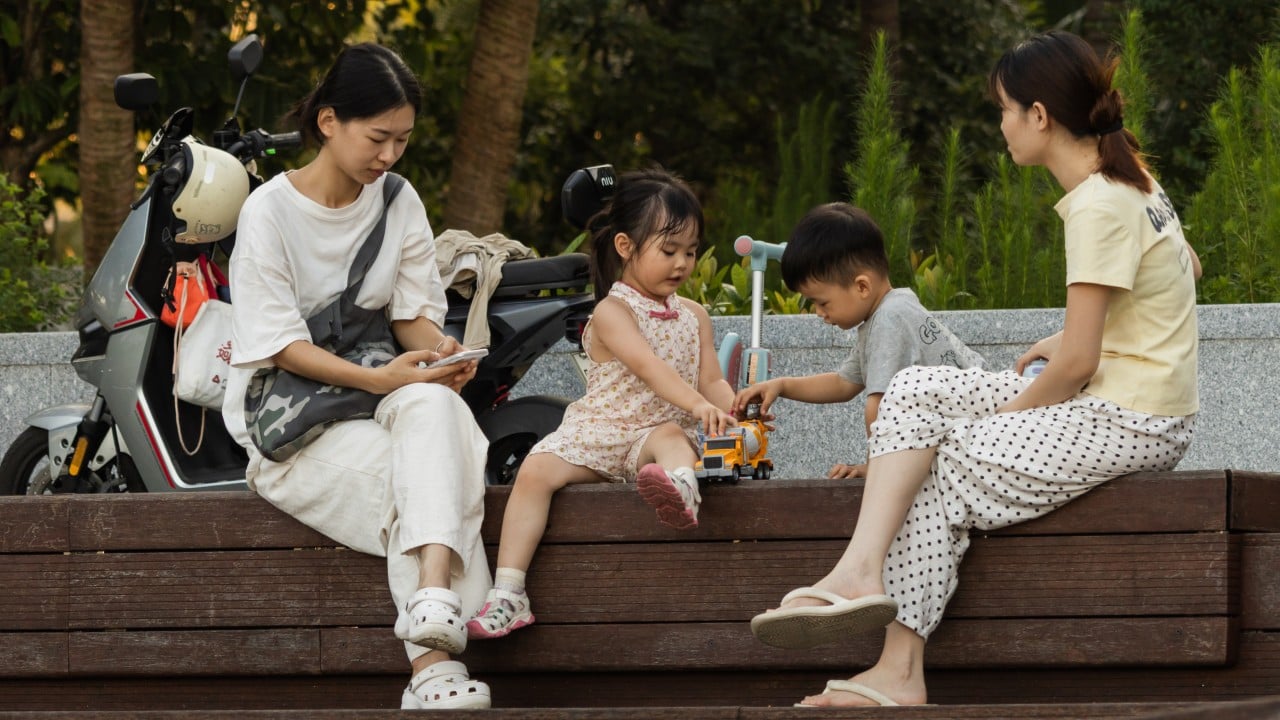
A recent study examining 125,532 articles published between 1990 and 2023 by China's official newspaper, People's Daily, reveals a notable shift in the way the Communist Party presents women's roles in society. The research, conducted by Wang Jia and Zhang Ruiyu, identified two distinct vocabulary sets - one associated with the public sphere (e.g., "leading woman", "career", "entrepreneurship") and the other with the private sphere (e.g., "family", "childbearing", "housework", "loving mother").
The study found that while the connection between women and the private sphere has always been strong, the link between women and the public sphere has weakened over time. In the early 1990s, the similarity between government references to women and familial, caregiving, and domestic roles was high. However, from the late 1990s onwards, a significant gap emerged, with the media's rhetoric concerning the private sphere remaining stable while public-sphere-related content sharply declined until about 2010.
The gap reached its widest point in 2018, indicating a decisive rhetorical shift in which women were increasingly separated from public roles while remaining firmly tied to domestic and familial duties. The authors suggest that this shift may be linked to broader institutional and ideological changes, such as the deepening of market reforms and the reallocation of the costs of social reproduction to households.
Despite the government's longstanding commitment to women's rights, the study notes a decline in women's public roles, particularly at the highest levels of officialdom, with no women serving in the Politburo since 2022. The researchers argue that addressing this issue could involve more active government promotion of women's status and participation in public life, along with stronger institutional support for women's educational and career aspirations, potentially contributing to China's demographic challenges, including its low fertility rate.
Written by urgent.news from South China Morning Post's reporting — not their text. Machine-written — may contain errors; check the original before relying on it.