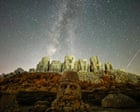
How to spot the Perseid meteor shower, a summer light show that promises to dazzle
The Perseid summer light show is back—and viewing conditions are especially promising for the Northern Hemisphere.

The Perseid meteor shower is set to dazzle viewers across the Northern Hemisphere, with especially favorable viewing conditions this year. The peak of the shower occurs from Wednesday night into Thursday morning, coinciding with a total solar eclipse in Spain, Iceland, and Greenland, as well as a parade of six planets. Under ideal conditions, as many as 50 to 100 meteors per hour may be visible, according to NASA. Approximately 30 to 50 meteors per hour can be seen from rural areas.
These meteors are remnants of debris left behind by comet 109P/Swift-Tuttle, which orbits the sun every 133 years. The Earth passes through this debris trail annually, causing the meteors to appear as streaks of light as they collide with our atmosphere at high speeds. This phenomenon has been observed for over 2,000 years and is popular due to the shower's ability to produce brilliant fireballs.
The best viewing conditions will be after midnight until dawn when the constellation Perseus is high in the northern sky. The Perseids will appear to radiate from this constellation. To maximize chances of spotting meteors, observers should go outside away from city lights and cloud cover, allowing their eyes to adjust to the darkness for about 30 minutes.
It is recommended to focus on a patch of sky until a quick, bright streak passes by, and to avoid distractions like phone screens. The new moon phase during the shower's peak will contribute to even better viewing conditions, as there will be no moonlight to compete with the meteors.
Written by urgent.news from Phys.org's reporting — not their text. Machine-written — may contain errors; check the original before relying on it.
This story
This is one outlet's version. Read the fullest account.
- How to spot the Perseid meteor shower, a summer light show that promises to dazzle pbs.org
- How To Spot Perseid Meteor Shower, A Light Show That Promises To Dazzle ndtv.com
- How to spot the Perseid meteor shower, a summer light show that promises to dazzle toronto.citynews.ca
- How to spot the Perseid meteor shower, a summer light show that promises to dazzle winnipegfreepress.com