How China’s ‘magic’ rice seeds are transforming the fortunes of Nigerian farmers
Just outside the Nigerian capital Abuja, where Green Agriculture West Africa Limited (Gawal) is based, locals do not refer to the company by name, instead as the place where the Chinese supply “magic” rice seeds. Ahmed Yusuf, 42, credits the seeds with turning around his rice business for good. Before Gawal, Yusuf’s yields averaged just 2 tonnes per hectare, putting him on the verge of forsaking…
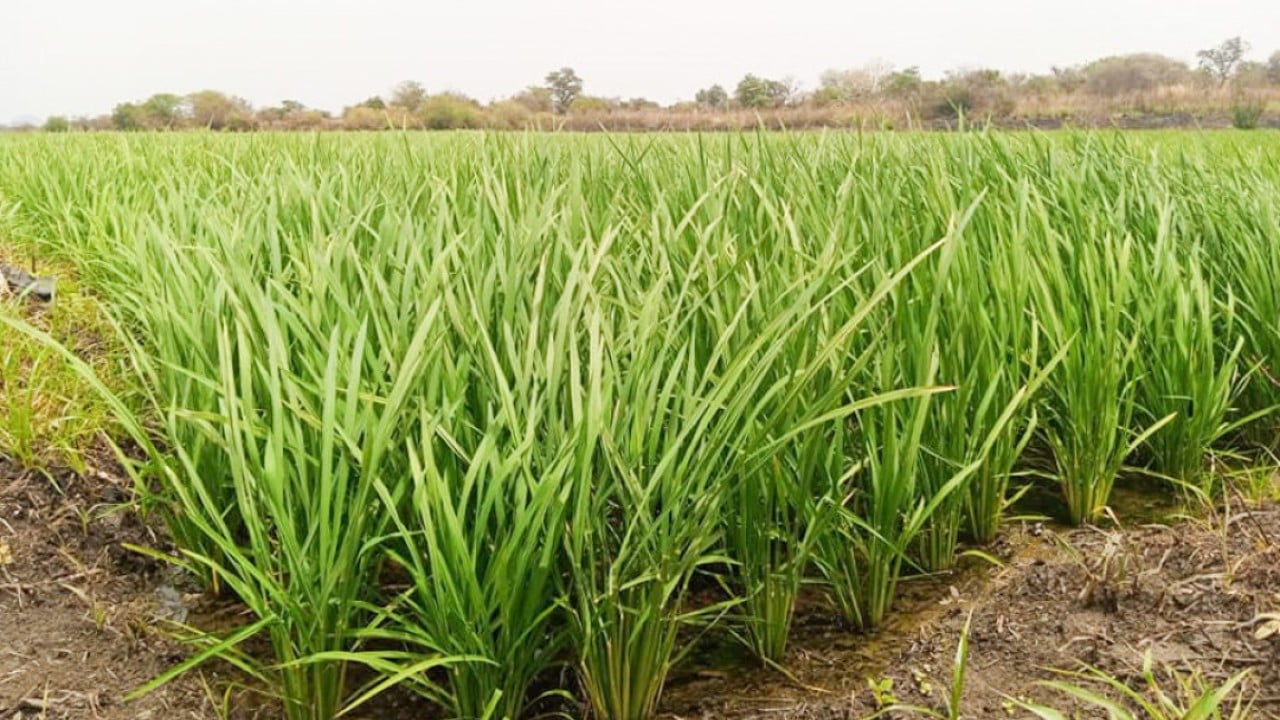
Outside Nigeria's capital, Abuja, Green Agriculture West Africa Limited (Gawal) is known colloquially as the location where Chinese suppliers offer "magic" rice seeds. Ahmed Yusuf, 42, is one local beneficiary of this innovation. Previously, Yusuf's rice yields averaged just 2 tonnes per hectare, prompting him to contemplate abandoning farming. However, after discovering Gawal's R1 rice strain, Yusuf's business saw a threefold increase in production due to the strain's superior yield potential.
This transformation is a part of a broader China-backed initiative to modernize African subsistence farming, challenging traditional Western aid models. Gawal, a joint venture between Yuan Longping High-Tech Agriculture and Beijing-based CGCOC Group, is among numerous Chinese firms capitalizing on the agricultural potential in Africa.
The company provides new seeds, machinery, field expertise, and processing capacity to smallholder farmers, who also access modern technologies under a program linked to the Nigerian government.
Gawal's R1 rice variety, launched in 2017, is a popular choice among farmers due to its disease resistance and excellent yield potential, ranging from 7.5 to 8 tonnes per hectare. Other Chinese-developed varieties, such as Faro 69 and Faro 70, boast even higher yields, ranging from 11 to 13 tonnes per hectare. This has contributed to a significant increase in Nigeria's rice production, from 7 million to approximately 10.5 million tonnes annually.
Xu Guoxin, part of the team behind Gawal's R1 variety, highlighted the potential of Nigeria's arable land and large population for agricultural development. Nigeria's favorable environment for agricultural cooperation, coupled with the need for improved technologies and farming systems, makes it an ideal partner for China's agricultural diplomacy.
Gawal's demonstration farm in Abuja showcases its technology and seed offerings, attracting Nigerian farmers and serving as a training ground. Despite challenges, Gawal has successfully partnered with the Nigerian government and local communities, resulting in increased yields and improved farmer livelihoods. The Chinese-backed agricultural initiative extends beyond Nigeria, encompassing projects in Burkina Faso, Ethiopia, Guinea, and Zimbabwe, underscoring China's commitment to agricultural development across the African continent.
Written by urgent.news from Reuters Business via SCMP's reporting — not their text. Machine-written — may contain errors; check the original before relying on it.
This story
This is one outlet's version. Read the fullest account.