'His urine goes on tour around Europe, showing the kings and queens this glowing pee': The weird world of alchemy before chemistry
Science writer Kit Chapman on the weird world of alchemy before chemistry.
Before chemistry was a formal science, humans experimented with substances to solve problems, cure illnesses and make money. Author Kit Chapman, in his book The Age of Alchemy: How Early Innovators Shaped Modern Chemistry, explores how these ancient, protoscientific traditions shaped the world. Chapman reveals how early innovations across the globe paved the way for modern science, from our ancestors' use of fire to disastrous pyrotechnics.
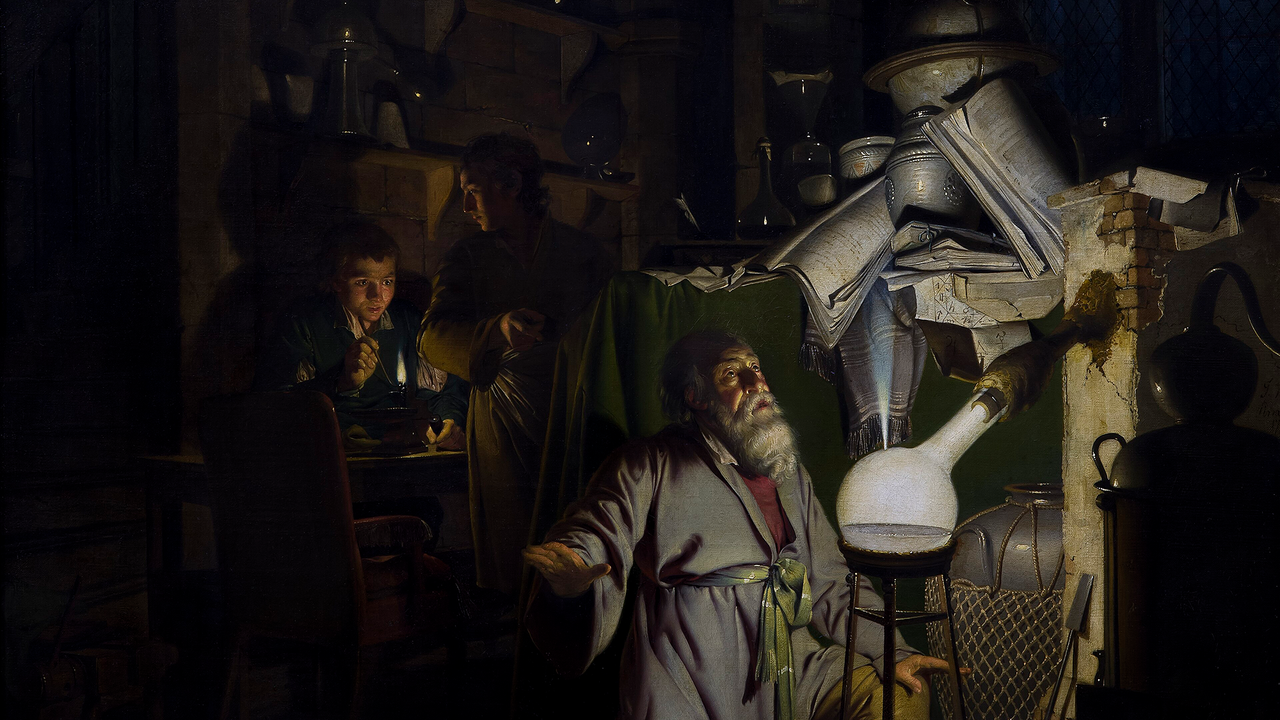
One of Chapman's favorite anecdotes is the story of Hennig Brand, who accidentally discovered phosphorus in the 17th century while trying to turn his own urine into gold. Brand bankrupted two wives to fund his urine habit, eventually selling the glowing urine to a friend. This story encapsulates the human connection, the unraveling of mythology and theology, and the beginning of scientific inquiry.
Chapman emphasizes that these early innovators were not thinking, "Oh, I'm going to do chemistry." Understanding how these discoveries shaped modern knowledge of how things work is essential. Science is not separate from the real world; it is intertwined with culture, belief, trade, globalization, and discovery. The book showcases the work of various artisans, potters, weavers, bakers, and urine salesmen, as well as female perfume makers in ancient Assyria.
The pursuit of beauty and the secrecy surrounding ancient texts also play a significant role in the history of science. Many recipes were hidden as trade secrets, with craftsmen using code words. The fear of losing control over valuable knowledge, such as the ability to turn something into gold, led to the destruction of texts in Alexandria in 300 A.D. by Emperor Diocletian, driven by political motives and a desire to maintain his power.
Written by urgent.news from Live Science's reporting — not their text. Machine-written — may contain errors; check the original before relying on it.