Hidden environmental cost of powering growing digital and AI-world
Despite the astronomical water footprint of data centres, some States, which already have difficulties in meeting their water needs, have announced huge data centre projects.
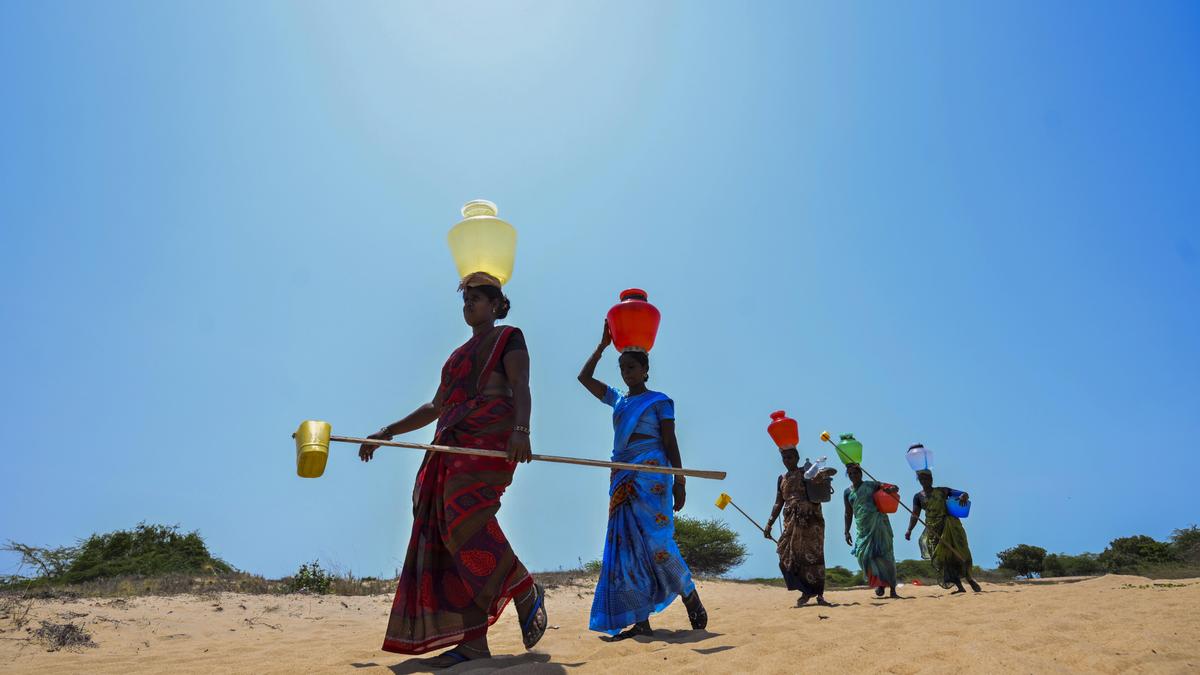
A University of California, Riverside study reveals a hidden environmental cost associated with the growing digital and AI world: the water footprint of powering systems like ChatGPT. One conversation with ChatGPT, involving 20 to 50 exchanges, can consume up to half a liter of water. India is experiencing a surge in data centers, with capacity increasing from 375 MW in 2020 to 1,500 MW by 2025 and projected to reach 13.56 GW by 2031-32.
The UN reports that data centers currently consume enough water to meet Chennai's needs for 8.8 years, enough to meet Chennai's needs for 8.8 years, and this could rise to 9.3 trillion liters by 2030.
Some states, facing water scarcity, are promoting data center projects. Google plans a 1GW AI hub in Vishakapatnam with AdaniConneX, while Bharti Airtel and Meta are investing in data centers in Jamnagar. To attract companies, Andhra Pradesh offers 100% GST reimbursement, stamp duty exemption, and deemed distribution licenses for data center projects with a minimum capacity of 300 MW. Uttar Pradesh, Gujarat, and Maharashtra are also planning significant investments in data centers.
However, these projects face resistance due to concerns about their environmental impact and strain on resources like electricity and water. Shaolei Ren, a professor at the University of California, Riverside, suggests making policy changes to improve transparency by mandating disclosure of monthly and peak water use, water sources, and cooling technologies.
Experts warn that many data centers, especially in water-stressed regions, may deplete local water sources. The CGWB's assessment shows India's overall groundwater extraction at 60.47%, with 11.1% of assessment units classified as over-exploited. Gautam Buddha Nagar in Uttar Pradesh has a groundwater extraction of 104.79%. Hyderabad and Visakhapatnam are also at risk of over-exploitation, with Visakhapatnam having the lowest groundwater reserve in the state.
Some companies are exploring seawater cooling for data centers, but brine discharge can harm marine ecosystems. The government must address these issues through transparent guidelines and implementation at the state level.
Written by urgent.news from The Hindu - Sci-Tech's reporting — not their text. Machine-written — may contain errors; check the original before relying on it.