Guilty Pleasure? Science Says Your Reality TV Obsession Is Totally Normal
It's a Tuesday night. You have an early meeting, a book you've been meaning to finish, and every intention of sleeping by eleven. And yet, there you are at 1 am, fully invested in whether two strangers in a locked house are going to make up or blow up, texting a friend in capital letters about someone you have never met and will never meet. Sound familiar? Don't worry, you have plenty of company.…
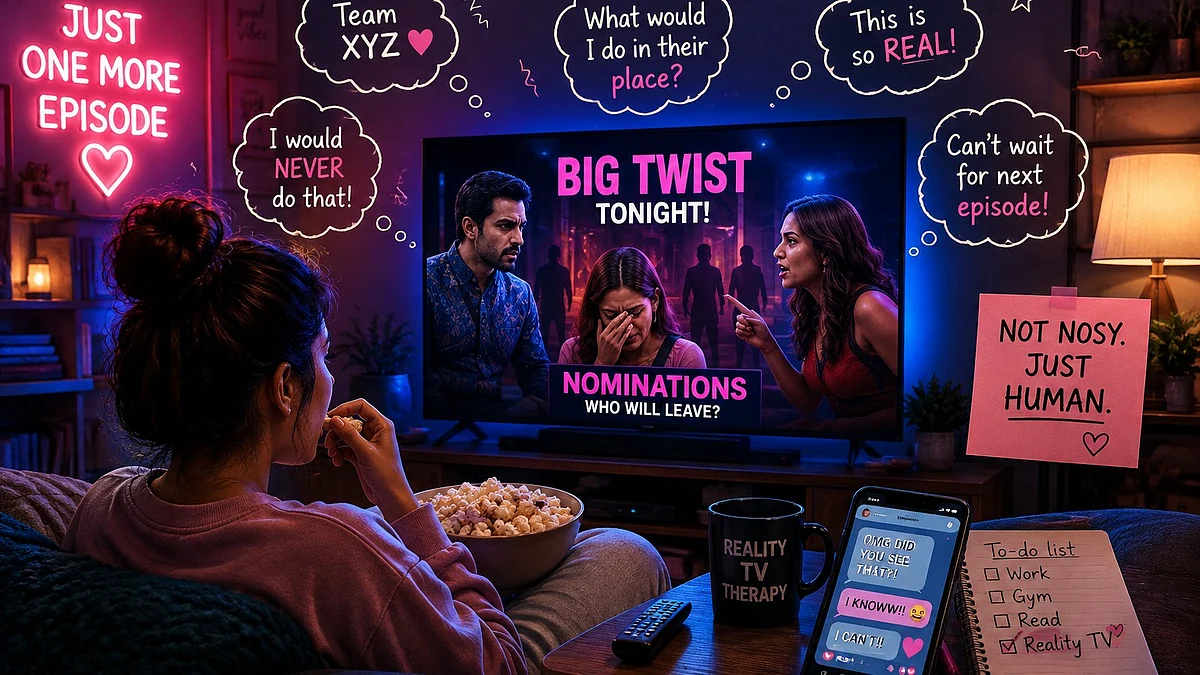
Reality television has become a main event, not just background noise. Shows like Bigg Boss, Lock Upp, Khatron Ke Khiladi, and The Alliance draw massive audiences. The brain is wired to watch this type of content, as humans are naturally curious about others' behaviors and thoughts. Watching reality TV provides a sense of social comparison, allowing viewers to relate to contestants' experiences and assess their own lives.
Parasocial relationships form, where viewers develop emotional connections with media figures despite the lack of real-life interaction. This phenomenon helps explain why viewers can become emotionally invested in contestants' lives and care deeply about their fates, even if they never met the individuals. Reality TV serves as a mirror, a debate, and a group discussion, providing entertainment, escapism, and a way to interact with others.
Written by urgent.news from Free Press Journal's reporting — not their text. Machine-written — may contain errors; check the original before relying on it.