Exploring 'very low Earth orbit': The world's 1st air-breathing satellite thruster could soon get a test run
Air-breathing electric propulsion could help satellites explore a new frontier, one that lies quite close to our planet.
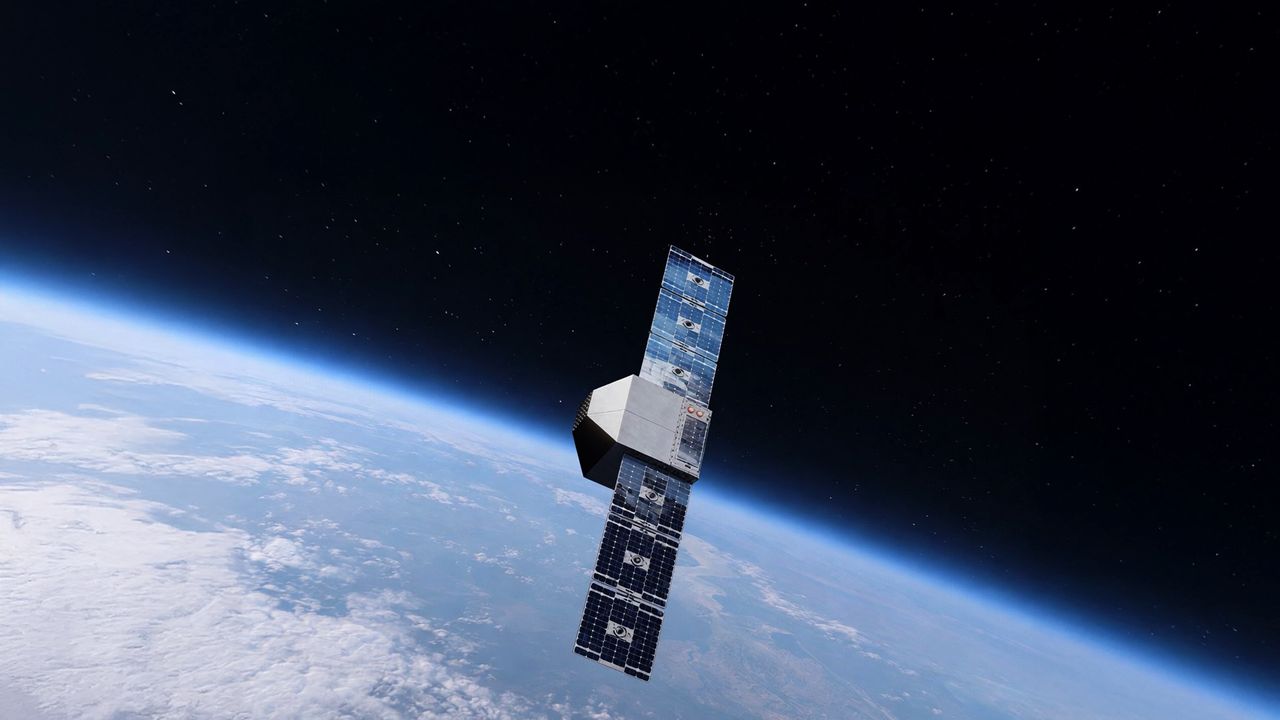
Kreios Space, a Spanish company, plans to launch the world's first satellite that employs air-breathing electric propulsion (ABEP) into orbit. This innovative technology harnesses air from Earth's atmosphere, heats it up, ionizes it and expels it to generate thrust, enabling satellites in very low Earth orbit (VLEO) to counteract atmospheric drag without using liquid fuel.
CEO Adrián Senar stated that this method will allow for higher-resolution Earth observation, improved satellite communications, responsive and accurate missions, and a more sustainable orbital infrastructure. The satellites will be built by Kreios Space, while Kongsberg NanoAvionics, a Lithuanian company, will provide the satellite bus to carry the ABEP system into orbit.
The company has chosen 2027 as a notional target for its first space mission, as VLEO technologies have gained increased interest and development. Satellites in VLEO offer several advantages, including sharper imagery due to their closer vantage point and less crowded orbital space compared to low Earth orbit (LEO), which is already heavily populated with satellites.
Written by urgent.news from Space.com's reporting — not their text. Machine-written — may contain errors; check the original before relying on it.