Colourful Festivals Can Also Be Eco-Friendly
Prime Minister Narendra Modi advocated a shift to eco-friendly Ganesh idols for festive celebrations in his Mann Ki Baat address recently, amidst a raft of court cases calling for a ban on idols made of artificial materials. But state governments appear to be in no hurry to make festivals truly green. The use of Plaster of Paris (PoP) to make idols in Maharashtra has been agitated in the courts…
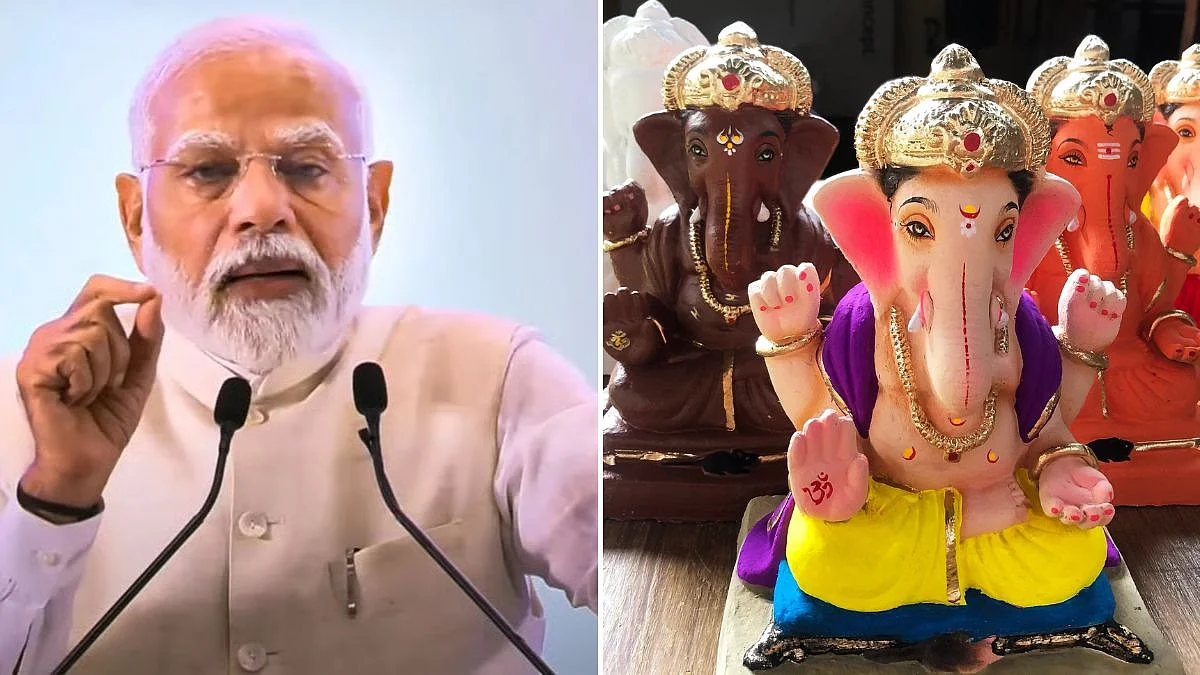
Recent court cases surrounding Ganesh idols have reignited discussions on eco-friendly celebrations, with Prime Minister Narendra Modi himself calling for a shift in festivities. Despite this push, state governments seem reluctant to fully embrace green initiatives. In Maharashtra, the use of Plaster of Paris (PoP) for idols has sparked legal battles since 2024, yet the administration remains unconvinced a ban is feasible this year.
Even worse, larger idols exceeding six feet are permitted to be submerged in natural bodies of water, while smaller, artificial ones are being immersed in newly created artificial ponds. Pollution stemming from synthetic idols and toxic paints has become a national concern, as evidenced by the immersion of 1.96 lakh small idols and 7,000 large ones in Maharashtra alone last year.
Karnataka took a step in the right direction by banning PoP idols, implementing enforcement measures such as the seizure of idols. Tamil Nadu, however, lags behind in enforcing these guidelines, with the National Green Tribunal questioning why such idols should be allowed in the sea. Bengal, known for its Durga Puja, has a ban on thermocol and flimsy plastics dating back eight years, but enforcement remains weak.
The ostentatious nature of festivals, fueled by growing prosperity and religious sentiments, has made them more environmentally unsustainable. The waste generated often transcends borders, with microscopic plastics even reaching remote locations like the Himalayas and Antarctica. Governments must acknowledge their responsibility for the detrimental long-term effects of pollution.
While courts express sympathy for lawmakers and administrators, they cannot ignore the duty to protect the right to life and fulfill their responsibilities. Polluter pays and intergenerational equity are crucial principles that governments must adhere to through dialogue with communities. Some citizens are taking matters into their own hands by recycling even natural clay, a non-renewable resource, after immersion to create new idols. As environmental leaders, these initiatives need to become mainstream in the years to come.
Written by urgent.news from Free Press Journal's reporting — not their text. Machine-written — may contain errors; check the original before relying on it.