Improved defense capabilities: top economist accuses Pistorius of wrong investments
Why is a leading economist calling for a greater focus on AI and drones instead of tanks and frigates? IfW President Schularick sees a need for reform in arms procurement.
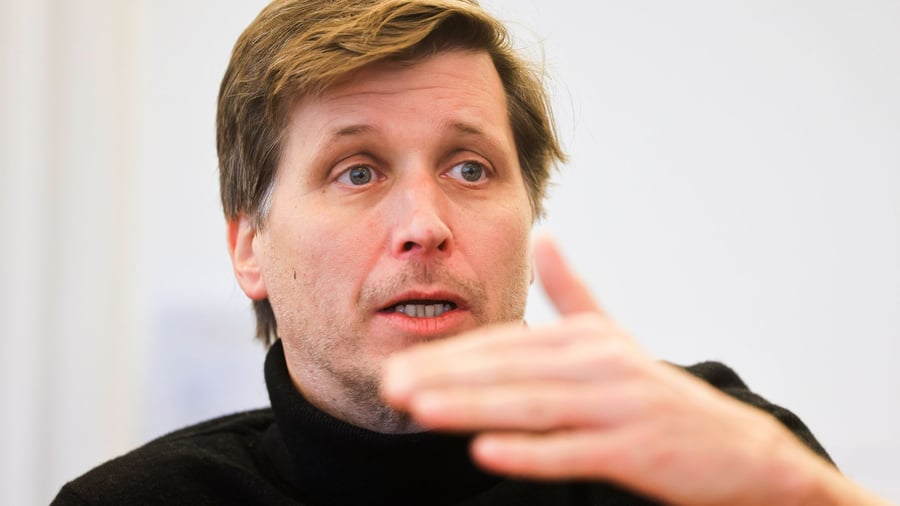
The president of the Kiel Institute for the World Economy (IfW), Moritz Schularick, accuses Defense Minister Boris Pistorius (SPD) of setting false priorities for armament investments. The top economist demands the appointment of a central coordinator for military procurement in the Chancellor's Office.
In an interview with the "Süddeutsche Zeitung", Schularick said that instead of investing the 700 billion euros available for the modernization of the German army by 2030 specifically in future weapon systems, Pistorius was using a large part of the money to fund tanks, frigates and other outdated technologies.
The largely credit-financed billion-euro program, which could also boost economic growth if used correctly, threatened to largely fizzle out. "We have a lot of capital, a lot of industrial know-how and, in some areas, still cutting-edge technologies," said the IfW chief, looking at Germany's strengths.
"What we don't have are hundreds of thousands of people who want to get into tanks and drive to the front. This means that instead of more soldiers, more manned vehicles and more barracks, we must - wherever possible - focus on AI, robotics, drones and satellite technology."
Schularick demands a central coordinator for procurement.
A single and, moreover, "very slow" ministry is, from the economist's point of view, overwhelmed with the reorganization of the German and European defense strategy.
Instead, someone is needed "who is endowed with political power, brings together industry, start-ups and ministries, can eliminate friction and concentrates everything on one goal".
He could imagine, for example, the former Telekom CEO René Obermann or ex-Airbus boss Tom Enders as such a coordinator in the Chancellor's Office, said the economist.
"Federal government and industry must adapt"
From Schularick's point of view, both the federal government and industry must completely change their approach to armament procurement.
It is not enough to spend a lot of money and replenish the German army's stocks. "Rather, we must think from the very beginning about what the economic processes must look like so that the necessary weapon systems can actually be reproduced quickly and in sufficient quantities in the event of a crisis," he said.
Instead of ordering highly complex, custom-made tanks in small quantities or 200 air defense missiles, the goal must be to build up production capacities.
"In other words: we no longer order the individual device, but the whole factory that can then produce 2,000 instead of 200 missiles per year very quickly in an emergency," said Schularick.
Since maintaining such a factory in peacetime would not be profitable for a company, the state would have to pay a premium for it.
Translated by urgent.news. Machine-written — may contain errors; check the original before relying on it.