600 flamingo chicks ringed at Malaga lagoon in 40th anniversary event
Something stunning, beautiful and cute happens at Fuente de Piedra every summer that most visitors never get to see. This […]
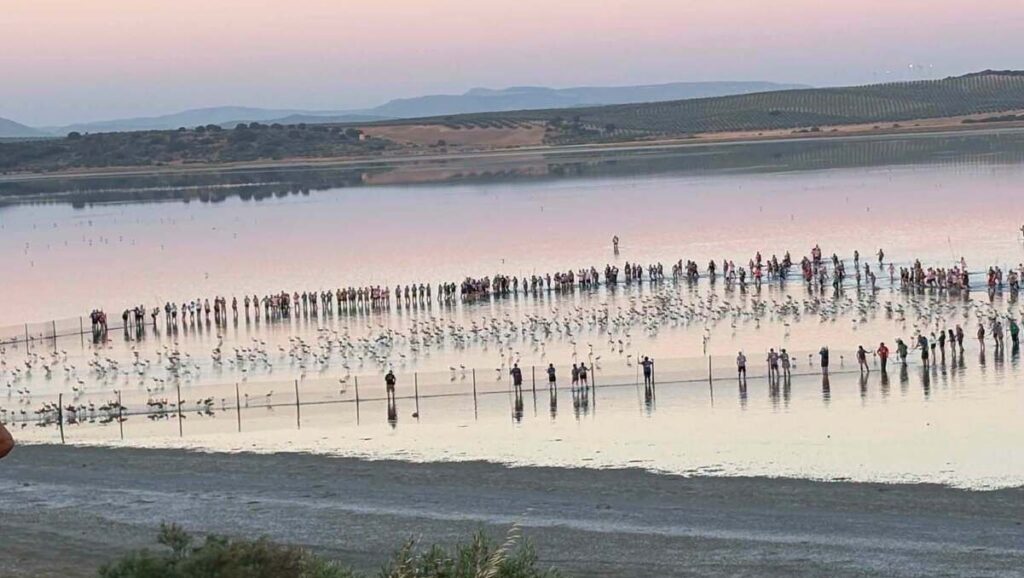
Every summer, Fuente de Piedra Nature Reserve in Malaga hosts a remarkable event that goes largely unnoticed by its visitors. This year, for the reserve's 40th anniversary, the celebration of the flamingo ringing programme reached an impressive milestone. A staggering 600 greater flamingo chicks were tagged in a coordinated effort that concluded in approximately four hours during the early morning, thanks to the dedication of over 400 volunteers.
The operation, organized by the Andalucian regional government, was a testament to the success of conservation through collaboration between scientists, officials, and local people.
Andalucia's environment chief, Fina Martinez, praised the collective efforts, emphasizing that conservation relies on the cooperation of all stakeholders involved. The mayor of Fuente de Piedra, Siro Pachon, attended the event alongside technicians from the regional environment agency and veterinarians from Cordoba Zoo, ready to provide assistance to any birds injured during the capture process.
Since the ringing programme began in 1986, Fuente de Piedra has witnessed the tagging of over 21,000 chicks, contributing to the monitoring of approximately 270,000 flamingos born at the lagoon since 1984. Each ring bears a unique code, enabling researchers to identify individual birds without the need for recapture. The outcomes have been outstanding, with more than 70% of ringed birds observed at least once, resulting in over 167,000 sightings across 23 countries, ranging from Guinea-Bissau to Cyprus.
Remarkably, about one-third of these repeat sightings occur right back at Fuente de Piedra, highlighting the strong affinity flamingos have for their birthplace.
The exceptional results this year were primarily attributed to an abundance of rainfall during the 2025/26 hydrological year, which saw the lagoon receiving 663 litres per square metre – the fourth-highest total in 50 years. This led to a peak depth of 101cm in March, significantly surpassing the usual 50cm. The higher water levels and improved isolation from predators resulted in an unprecedented 35,177 breeding pairs nesting at the site, the highest number recorded since monitoring began in 1984.
Written by urgent.news from Euro Weekly News's reporting — not their text. Machine-written — may contain errors; check the original before relying on it.