60 years after Konfrontasi, a Malaysian engineer recalls life on the frontline
FOR many Malaysians, the Indonesian Confrontation — or Konfrontasi — is a little-known chapter in the nation’s history. Yet for the soldiers stationed along Sarawak’s border in the mid-1960s, it was an undeclared war fought in dense rainforest, remote villages and rugged frontier outposts.
Sixty years after the Indonesian Confrontation, a Malaysian engineer named Raymond Goh Boon Pah reflects on his experiences during one of Malaysia's lesser-known historical events. The confrontation, which lasted from 1963 to 1966, was an undeclared war fought in the dense rainforests and remote villages along the border between Malaysia and Indonesia.
Goh served as a combat engineer, tasked with building roads to secure Sarawak's border. His mission was not to engage in battle, but to construct roads that would facilitate the supply of security forces in the field. Goh recalls that he and his fellow engineers carried firearms, as they were aware of the constant threat of attack.
Sarawak's history had undergone several transitions before Malaysia's formation. The region had been under the rule of the White Rajahs until the Japanese occupation during World War II. After the war, Sarawak was a British Crown Colony and became part of Malaysia in 1963. However, the territory remained largely undeveloped, with poor roads and limited infrastructure.
Before Malaysia's independence, tensions were already rising between Indonesia and Malaysia. In April 1963, Indonesian forces attacked a police station in Sarawak, marking the beginning of the Confrontation. The Indonesian government opposed the formation of Malaysia, viewing it as a British-backed project that threatened Indonesia's influence in the region. Cross-border incursions and guerrilla attacks soon followed.
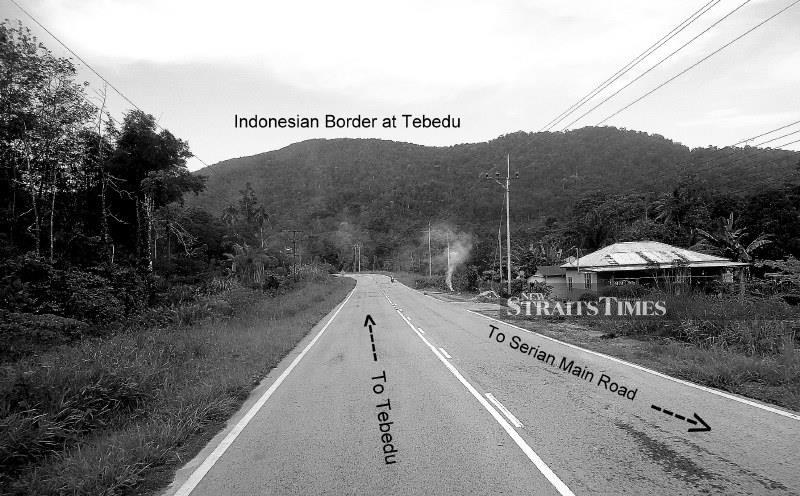
The Malaysian government introduced infrastructure projects under the KESBAN program to improve local communities and deter enemy sympathizers. Engineers like Goh were deployed to build roads essential for resupplying frontline troops. Goh's Engineer Squadron was assigned to construct roads leading to Tebedu, Bau, and the Lundu-Biawak areas near the Indonesian border.
Despite being engineers, Goh and his team carried firearms, as they were vulnerable to enemy attacks. During a tense encounter in April 1966, Indonesian soldiers were spotted approaching the border. Goh halted construction, ordered his men to take defensive positions, and engaged the intruders, resulting in two Indonesian soldiers being killed. Goh's experiences during the Confrontation provide insight into the challenges and risks faced by those who served on the frontline of Malaysia's history.
Written by urgent.news from New Straits Times's reporting — not their text. Machine-written — may contain errors; check the original before relying on it.