What is a glueball? Chinese-led team finds rare particle made entirely of force
In a historic breakthrough, a Chinese-led international team of scientists has confirmed the existence of the glueball – a rare form of matter made entirely of force. The finding was announced by a Chinese research team on Thursday at the International Conference on High Energy Physics in Natal, Brazil. Held every two years, the event features some of the most significant advancements in the…
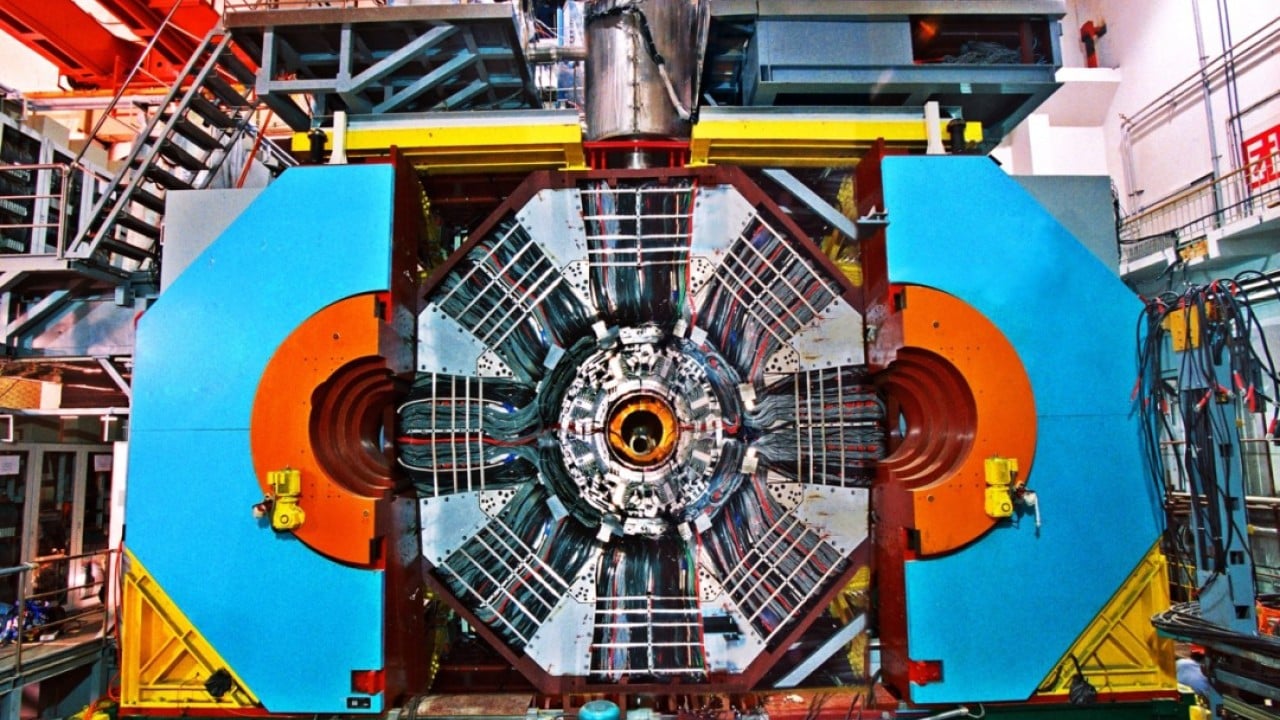
A Chinese-led international team of scientists has definitively confirmed the existence of the glueball, a rare form of matter composed entirely of force. The groundbreaking discovery was unveiled at the International Conference on High Energy Physics in Natal, Brazil, on Thursday. The research team, comprising around 700 scientists from 15 countries, utilized the Beijing Electron Positron Collider II over a span of 15 years to gather substantial evidence of the glueball's existence.
Glueballs are composed of gluons, particles that act as force carriers to bind quarks together, forming larger particles like protons and neutrons, which in turn make up atoms – the fundamental building blocks of all matter in the universe. Despite scientists predicting as early as 50 years ago that gluons could bind together into glueballs due to their attraction towards each other while carrying the strong force, evidence remained elusive until now.
The Chinese-led team identified a new particle as a potential glueball in 2011 and subsequently measured its mass and other properties in 2024 after analyzing approximately 10 billion J/psi particles produced by smashing electrons and their antiparticles at near light speed. This discovery revealed that the glueball carries no "flavour" information, marking it as a unique entity distinct from conventional particles such as protons and neutrons.
Co-leader Huang Yanping explained that the discovery signifies the recognition that "force itself has become a physical entity." The findings not only validated the theory describing strong interactions but also significantly expanded the boundaries of our understanding of the physical world. The collider, established in 1988, underwent a major upgrade in May that tripled its peak luminosity, thereby enhancing the likelihood of producing rare particle events and accelerating the discovery of the glueball.
Written by urgent.news from South China Morning Post's reporting — not their text. Machine-written — may contain errors; check the original before relying on it.