Visible planets and night sky guide for August
EarthSky's visible planets and night sky guide. The Perseid meteors will peak this week! Watch a video with meteor-spotting tips here. The post Visible planets and night sky guide for August first appeared on EarthSky .
August promises some exciting celestial events for skywatchers. The Perseid meteor shower peaks on August 12 and 13, offering a chance to see up to 50-100 meteors per hour under moon-free skies. EarthSky founder Deborah Byrd shares 9 easy tips to enhance meteor-watching. However, those in the Southern Hemisphere may miss this shower as the radiant for the Perseids doesn't rise in their region. Instead, they can observe the Delta Aquariids, which are more visible from the southern hemisphere.
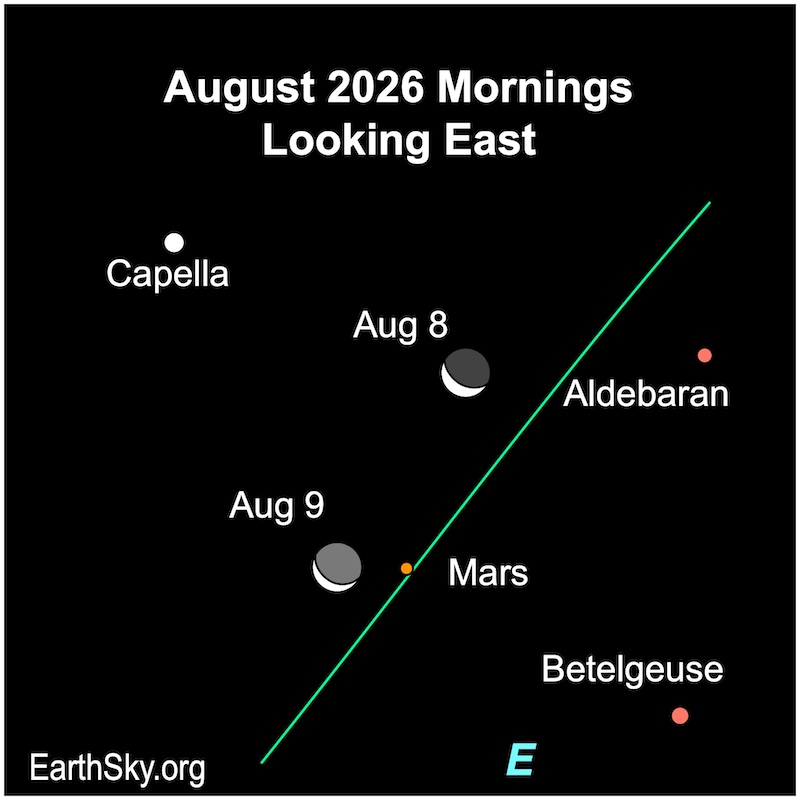
For those in the Northern Hemisphere, August mornings offer a unique treat. The waning crescent moon will be near the bright stars Capella, Aldebaran, and Betelgeuse, as well as the red planet Mars. This provides an excellent opportunity to view these celestial bodies together. While our charts are primarily designed for mid-latitudes in the Northern Hemisphere, it's essential to adjust for your specific location to accurately see and time these events.
Written by urgent.news from EarthSky's reporting — not their text. Machine-written — may contain errors; check the original before relying on it.