Thiruvananthapuram zoo set to protect old Arara nut-tree
Standing in the hog deer enclosure, the tree will be protected and its germplasm conserved so that the tree can be maintained in botanical gardens or zoos
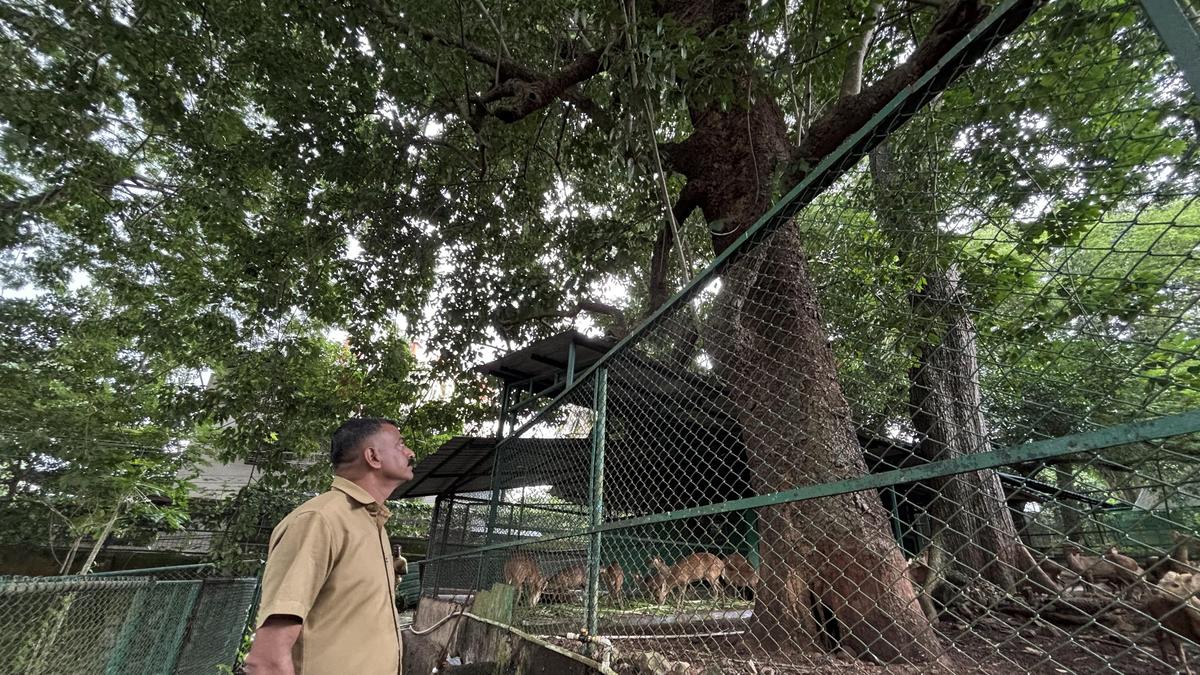
The Thiruvananthapuram zoo plans to safeguard a rare Arara nut-tree that is currently residing within its lush grounds. The Arara nut (Joannesia princeps) is an exclusive tree species native to Brazil in South America, belonging to the Euphorbiaceae family. Notably, this particular tree is the only one of its kind found in Kerala, residing exclusively in the Thiruvananthapuram zoo. Despite this, prior to its discovery, the tree had been mistakenly identified as a rubber tree.
The zoo authorities were unaware of the tree's true identity until recently, when a team from the Rubber Board visited the museum premises to inspect three rubber trees. Following this, Dr. P. Sujanapal, a senior principal scientist and head of the department of Silviculture at the Kerala Forest Research Institute, conducted a thorough examination of the tree.
Upon his inspection, Dr. Sujanapal identified the tree as the Arara nut-tree, a species that has been cultivated and preserved in various botanical gardens and research institutions across a few countries after being introduced from Brazil.
During his evaluation, Dr. Sujanapal noticed signs of bark damage, including cracks and dead or damaged tissue, particularly near the soil level. He suggested that the presence of excess nutrients in the soil might be contributing to the tree's condition. As the Arara nut-tree is a softwood, failure to address the damage could result in the tree toppling over, posing a danger to both visitors and the zoo's resident animals.
To ensure the tree's long-term preservation, Dr. Sujanapal recommended tree surgery, which would involve the removal of damaged bark, application of medicinal treatments to prevent further decay, and pruning to manage the tree's weight. Additionally, the tree's germplasm will be conserved to maintain its presence in botanical gardens and zoos.
Interestingly, only one other Arara nut-tree has managed to grow nearby over the years, suggesting that this tree is likely to be between five and eight years old.
Written by urgent.news from The Hindu's reporting — not their text. Machine-written — may contain errors; check the original before relying on it.