States with the least—and most—housing market inventory heading into the fall
Want more housing market stories from Lance Lambert’s ResiClub in your inbox? Nationally aggregated inventory is up just 2.1% on a year-over-year basis from July 31, 2025, to July 31, 2026. While that’s up a tad from the +1.9% year-over-year pace last month, it’s decelerated significantly since last year. If you go back 12 months, that year-over-year…
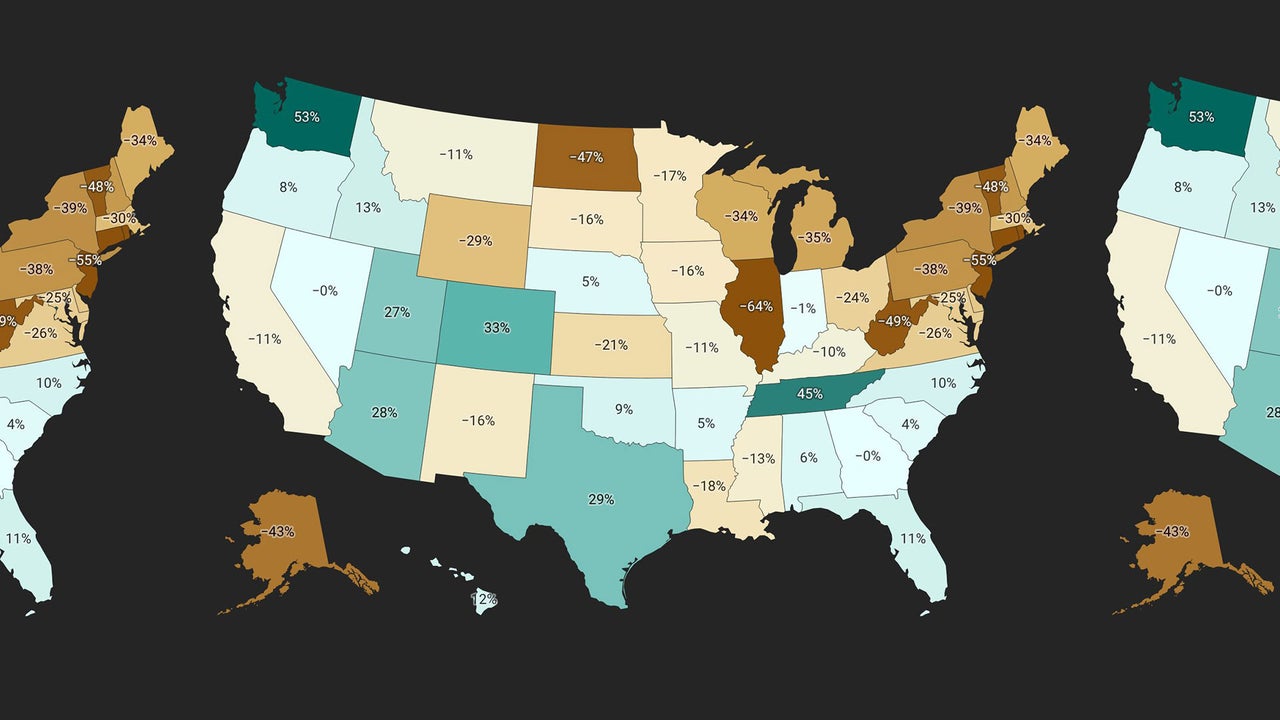
Nationwide, the housing market inventory has shown a minimal increase of just 2.1% year-over-year from July 2025 to July 2026. This modest growth marks a significant slowdown from the 24.7% increase observed a year ago, indicating a more stable but still soft market. Notably, the United States still lags behind pre-pandemic 2019 inventory levels by 9.1%, with certain regions in the Midwest and Northeast experiencing tighter housing markets.
The inventory for the entire nation rose by 218,514 homes from July 2024 to July 2025, and by an additional 23,465 homes from July 2025 to July 2026. In terms of state-specific data, 16 states now surpass pre-pandemic 2019 active inventory levels, including Alabama, Arizona, Arkansas, Colorado, Florida, Hawaii, Idaho, Nebraska, North Carolina, Oklahoma, Oregon, South Carolina, Tennessee, Texas, Utah, and Washington. Florida, however, is an exception, showing a slight year-over-year decline of -14% in active inventory.
Geographically, many parts of the Sunbelt and Mountain West, such as Punta Gorda, Florida, and Austin, have seen active housing inventory near or surpass pre-pandemic 2019 levels. This surge in new-home supply in the Sunbelt, coupled with slower domestic migration and rising mortgage rates, has contributed to the cooling of the resale market.
Builders in these regions are offering affordability incentives to maintain sales, which has further impacted the resale market by encouraging some buyers to opt for new homes instead. Despite these trends, the overall national housing market remains soft, with home prices essentially flat year-over-year.
Written by urgent.news from Fast Company's reporting — not their text. Machine-written — may contain errors; check the original before relying on it.