Sanctions Screening of Foreign Counterparty — Why Company Name Is Not Enough
How to conduct sanctions screening of a foreign company, its owners and executives, and reduce the risk of payments and contracts being blocked.
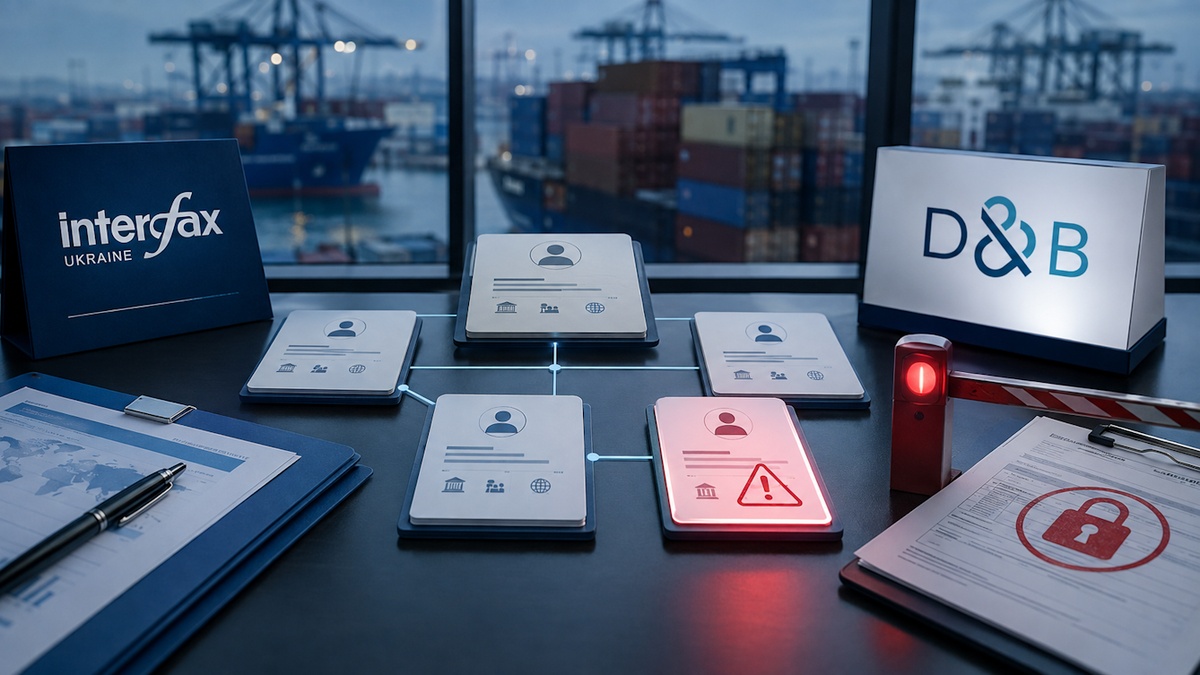
In the era of increasingly stringent sanctions, companies must conduct thorough screening of foreign counterparties, their owners, and executives to avoid potential payment and contract blockages. While checking a company's name against a sanctions list may seem sufficient, it often fails to capture the complexities of corporate structure and ownership. A company may not be directly sanctioned but could still pose risks through connections to a sanctioned owner, director, parent company, or subsidiary.
International sanctions have intensified the need for comprehensive counterparty screening among Ukrainian exporters, importers, banks, logistics firms, and enterprises seeking foreign funding. Even when both parties are not sanctioned, payment or delivery can be halted due to involvement with high-risk intermediaries, vessels, financial institutions, or related entities. To mitigate these risks, businesses must go beyond mere name-based searches and investigate further.
D&B, a globally recognized compliance solutions provider, utilizes advanced screening tools to analyze legal entities, beneficial owners, and related persons against sanctions lists, politically exposed persons lists, information on significant legal events, and negative media coverage. Their solutions help identify potential risks that might otherwise go unnoticed.
Maksym Urakin, Director of Development and Marketing at Interfax-Ukraine and Head of the D&B-Interfax-Ukraine business unit, emphasized the importance of a holistic approach to sanctions screening.
Before entering into contracts, Ukrainian companies must verify the registration details of the legal entity, establish its ownership structure, and compare the information against relevant risk lists. This due diligence is particularly crucial for banks, carriers, insurers, and other parties involved in the transaction. Even if the primary actors are not subject to sanctions, a single high-risk intermediary can jeopardize the entire deal.
Upon completion of the screening, companies may opt to terminate the transaction, request additional documentation, alter the payment route, incorporate sanctions clauses in the contract, or reserve the right to end cooperation should the partner's status change.
Sanctions compliance is an ongoing process, not a one-time task. Companies must continuously monitor the status of their partners and key stakeholders, as changes in a company's or owner's situation during the course of a long-term contract could trigger further actions. Since 1841, Dun & Bradstreet has been providing business information solutions, with its specialized division in Ukraine, Interfax-Ukraine, assisting Ukrainian companies in screening foreign counterparts and navigating international business data. For inquiries, visit dnb.ua, email [email protected], or call +38 (044) 270-65-74.
Written by urgent.news from Interfax-Ukraine's reporting — not their text. Machine-written — may contain errors; check the original before relying on it.